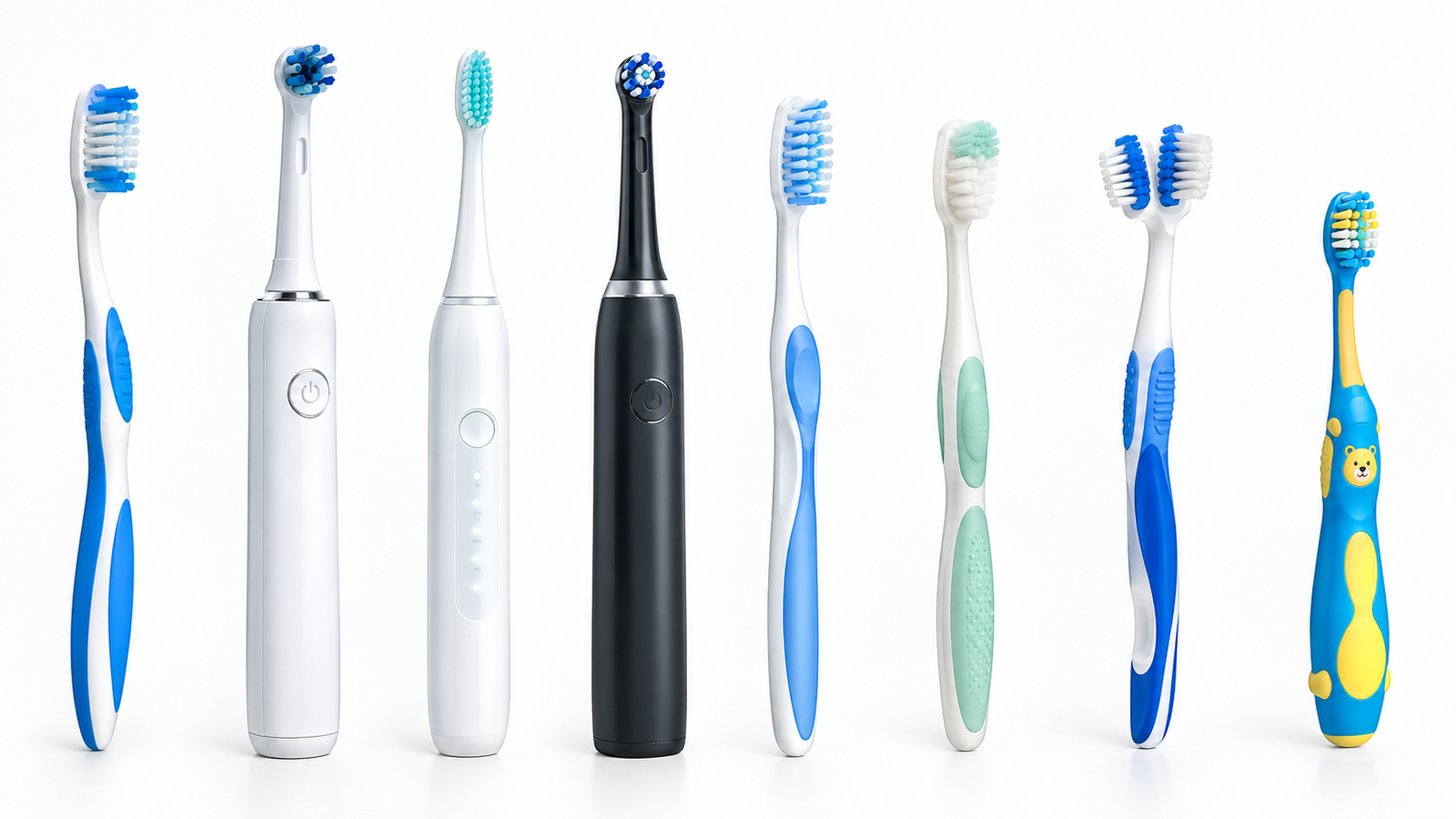
Complete Guide to Every Type People searching for types of toothbrushes likely want to know the options available to them, and which type of toothbrush is right for their teeth, gums, budget or dental needs. This guide explains the different types of toothbrushes, which ones are different and how they work, and who should consider each kind of toothbrush before making a purchase.
It may seem easy to pick a Types of Toothbrushes until you get to a store or website and see the bewildering variety of manual toothbrushes, electric toothbrushes, sonic toothbrushes, oscillating toothbrushes, soft-bristle toothbrushes, toothbrushes for braces, and more.
The best news is that you don’t need to know everything about every type of toothbrush in order to make a smart choice.
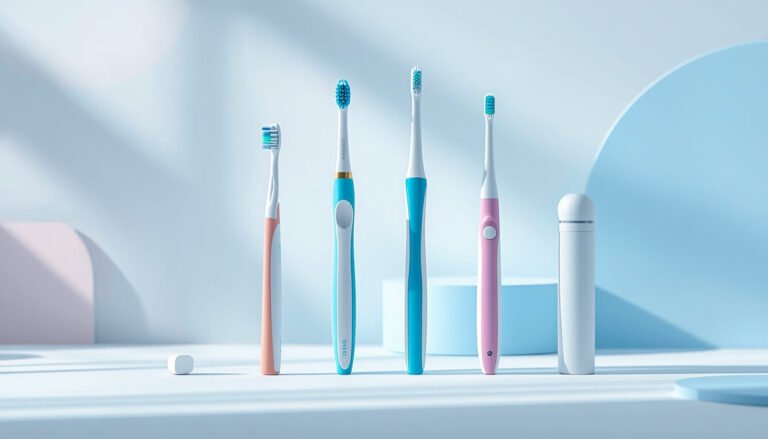
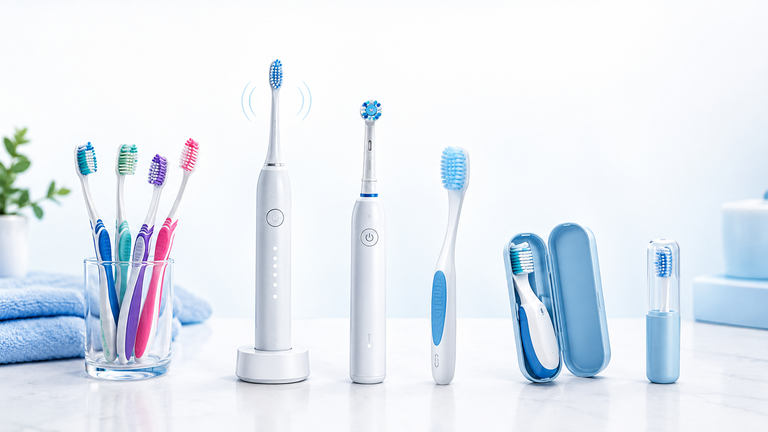
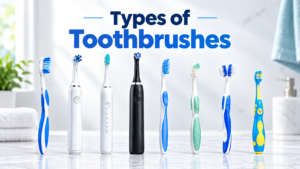
The different types of toothbrushes can be grouped in a few ways based on how they work, their bristle type, design, and intended use. Knowing what is different about each type of toothbrush makes it easy to find the best kind of toothbrush for you.
The different types of toothbrushes can be separated into these groups:
- Manual Toothbrushes
- Electric Toothbrushes
- Sonic Toothbrushes
- Oscillating Toothbrushes
- Soft-Bristle Toothbrushes
- Medium-Bristle Toothbrushes
- Hard-Bristle Toothbrushes
- Toothbrushes for Sensitive Teeth
- Toothbrushes for Braces
- Children’s Toothbrushes
- Travel Toothbrushes
- Eco-Friendly Toothbrushes
- Interdental Brushes
- Single-Tuft Toothbrushes
In this guide we will discuss the most common types of toothbrushes and their use, and show you how to choose the best type of toothbrush for your everyday brushing needs.
1. Manual Toothbrushes
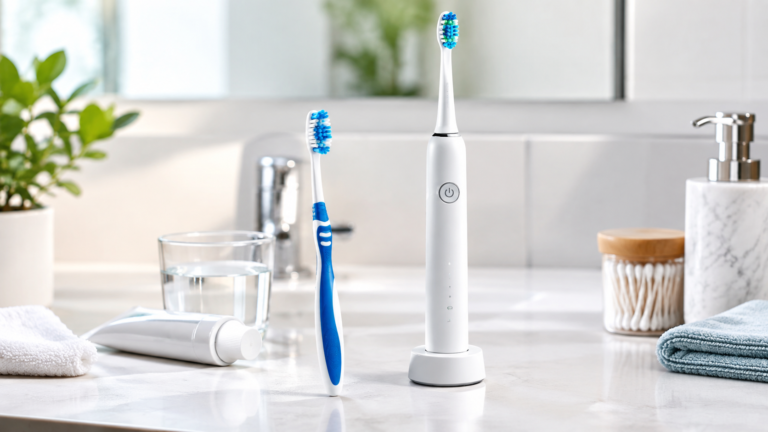
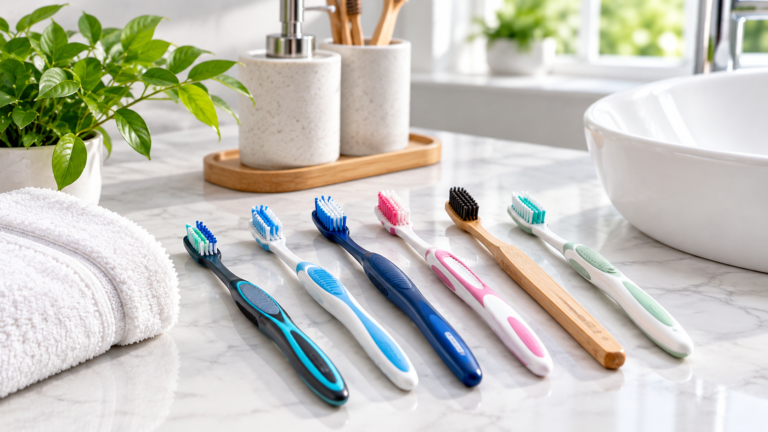
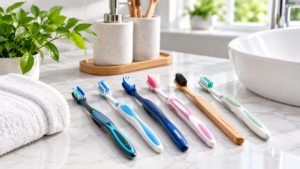
The classic manual toothbrush is a popular option for everyday brushing. A manual toothbrush has a handle and a bristled head which is moved by hand to clean teeth and gums.
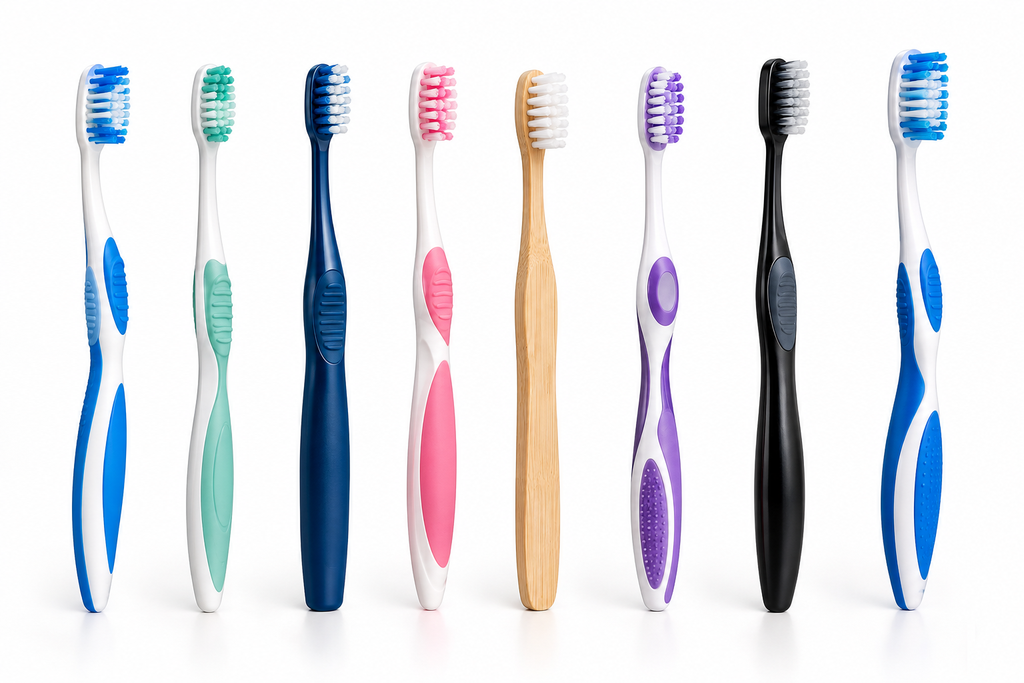
Manual toothbrushes come in many styles and sizes. Some have small heads for getting into tight places, or angled handles or special bristle patterns.
Best for
- Everyday brushing
- Those who want a simple toothbrush
- Travelers
- Budget-conscious buyers
- Those who don’t want to charge a toothbrush
A good manual toothbrush can clean your teeth when used with correct brushing technique and brushing for about 2 minutes.
The manual toothbrush’s main benefit is simplicity; there are no batteries, charging docks or other technology to maintain.
2. Electric Toothbrushes
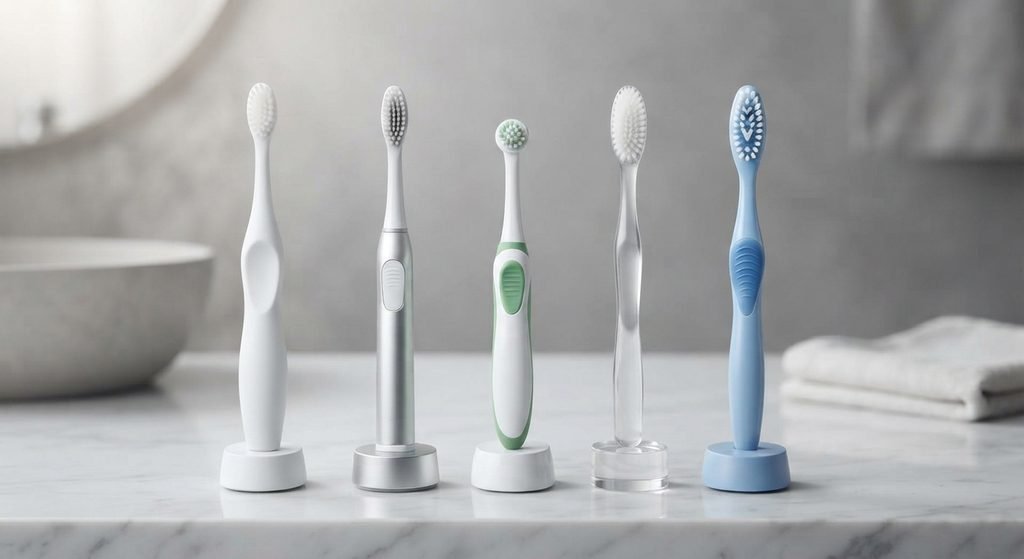
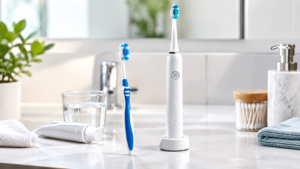
An electric toothbrush has a motorized head which moves the brush in a particular pattern. The type of movement can vary depending on the type of electric toothbrush – the head can rotate, oscillate, or vibrate. Many electric toothbrushes offer additional features such as timers, pressure sensors, multiple brushing modes, and more.
For those who find it difficult to brush correctly, an electric toothbrush can make toothbrushing much easier.
Advantages of electric toothbrushes
- Advantages of electric toothbrushes
- Powered brushing movements
- Pressure sensors on some models
- Multiple cleaning modes
- Can be helpful for people with limited dexterity
However, electric toothbrushes tend to cost more than simple manual toothbrushes, and require a commitment to buying replacement brush heads.
For more information, see our related guide: Manual vs Electric Toothbrush: Which Is Better?
3. Sonic Toothbrushes
A sonic toothbrush is a type of electric toothbrush which uses powerful vibrations to move the brush head. These quick movements create a dynamic cleaning action which cleans around and along the teeth. This type of electric toothbrush typically has longer bristles in a head that is similar to a traditional manual toothbrush.
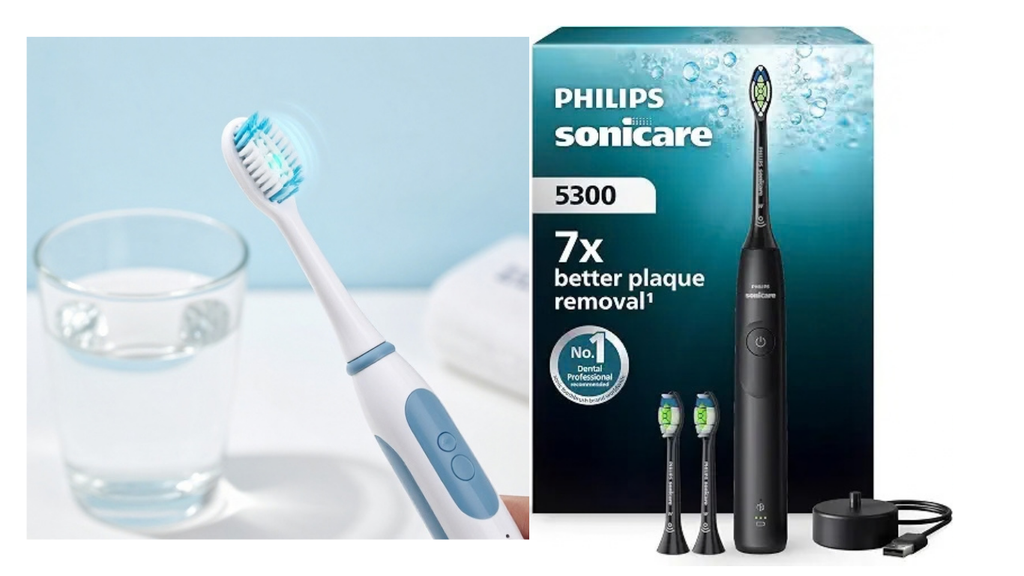
Some sonic toothbrushes offer multiple levels of power and special modes for sensitive teeth or gum care.
Who should consider a sonic toothbrush?
A sonic toothbrush can be a good option for anyone looking for powered brushing with a vibrating type of movement. Some people simply prefer the look and feel of a longer, traditional-style bristle head. Not all sonic toothbrushes are the same – features such as brush head design, pressure, battery life, and brush head replacement costs can vary from model to model.
See our related guide: Sonic vs Oscillating Toothbrush: What’s the Difference?
Who should consider a sonic toothbrush?
4. Oscillating Toothbrushes
An oscillating toothbrush uses a small rounded brush head which moves from side to side (and sometimes rotates). Unlike the long head of a sonic toothbrush, an oscillating toothbrush has a smaller rounded head which allows for cleaning individual teeth.
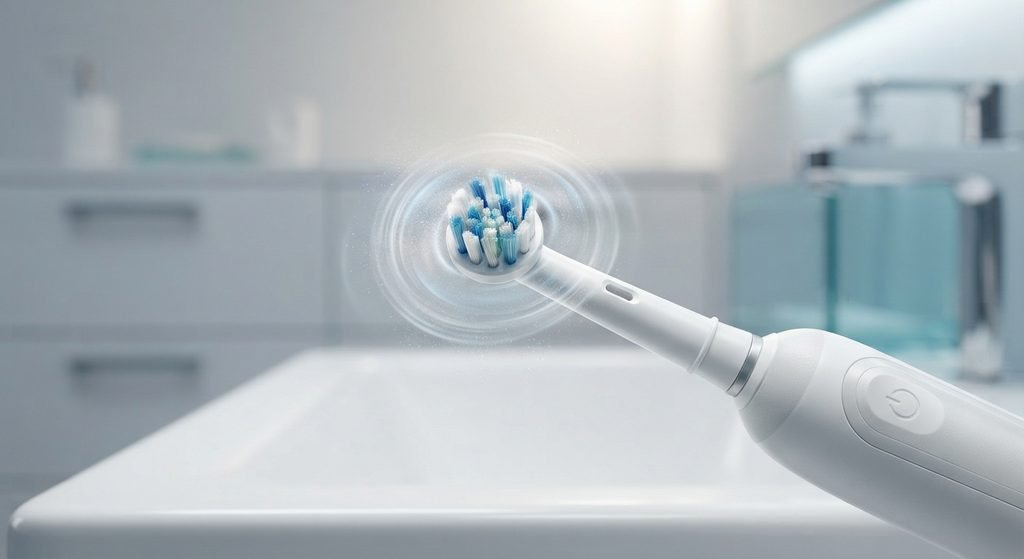
The smaller head of an oscillating toothbrush can help with targeting individual teeth – and reaching the back teeth.
Best for
- People who prefer a small head
- Those who want powered brushing
- Cleaning individual teeth
- Those who like a rotating or oscillating type of brushing motion
Correct technique is important even with an oscillating toothbrush, it is best to avoid pressing too hard on the toothbrush and to follow the manufacturer’s instructions.
See our related guide: Best Oscillating Toothbrushes.
5. Soft-Bristle Toothbrushes
A soft-bristle toothbrush is generally a good option for most brushing needs. Soft bristles are gentle on the gums and teeth while still providing a thorough cleaning. There is little reason for most people to use a hard-bristle toothbrush. Aggressive brushing can cause irritation and damage to the gum line.
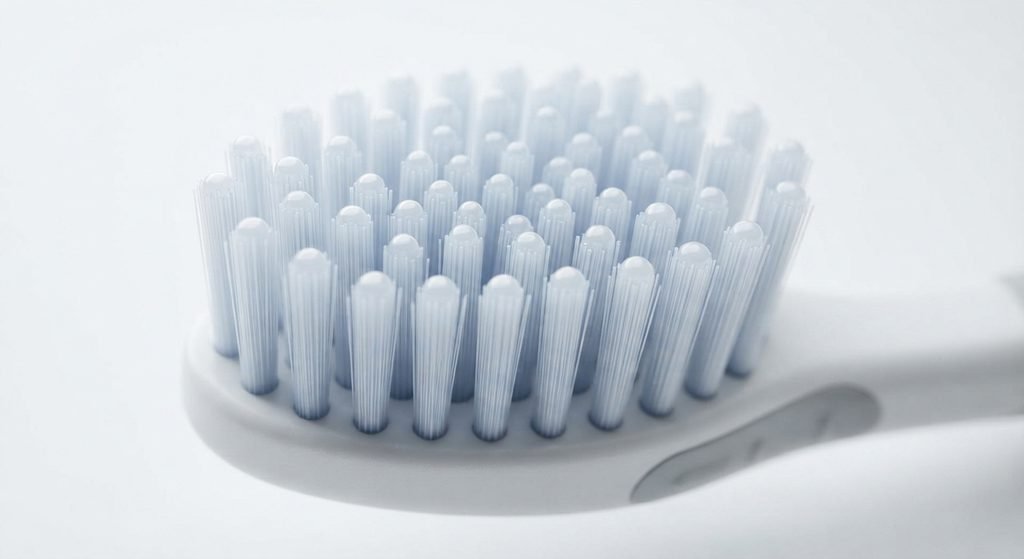
Soft-bristle toothbrushes are available in both manual and electric styles.
Why choose soft bristles?
- Gentle on gums
- Comfortable for everyday use
- Suitable for many people with sensitive mouths
- Available in many manual and electric designs
The shape and quality of the bristles also matter. A well-designed brush should allow you to clean around the gumline without requiring excessive pressure.
For a deeper comparison, read Soft vs Medium vs Hard-Bristle Toothbrushes and our guide to Best Soft-Bristle Toothbrushes.
6. Medium-Bristle Toothbrushes
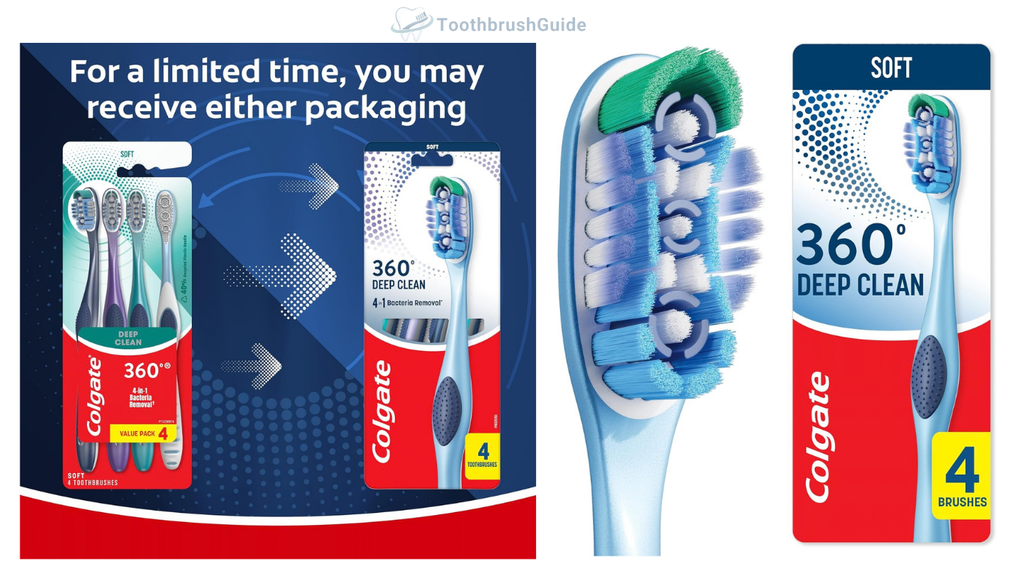
Medium-bristle toothbrushes offer firmness compared to soft-bristle types. Some people prefer the more rigid feeling, but firmer doesn’t automatically equal more cleaning power.
If you brush aggressively, a medium-bristle brush may not be as forgiving as a soft-bristle option.
For that reason, it’s worth looking at your habits, gum sensitivity and your dentist’s recommendations before going with a medium-bristle toothbrush.
7. Hard-Bristle Toothbrushes
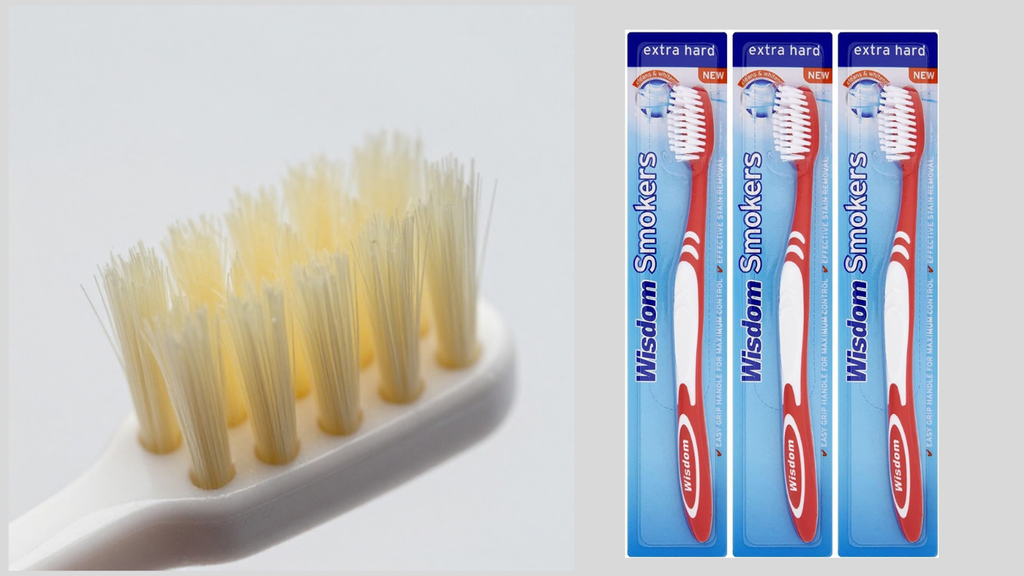
Hard-bristle toothbrushes have much firmer bristles and aren’t often recommended for routine use.
While feeling firm, aggressive brushing isn’t necessary to remove everyday plaque.
Using too much pressure with hard bristles can also be tough on your gums and tooth surfaces.
For everyday use, a soft-bristle toothbrush is a more practical choice.
8. Toothbrushes for Sensitive Teeth
A toothbrush for sensitive teeth typically has extra-soft bristles and a gentle brushing action.
Tooth sensitivity can have many causes, so changing your toothbrush may not address the underlying problem. If you have sensitive teeth, consult with a professional if it’s persistent, severe or worsening.
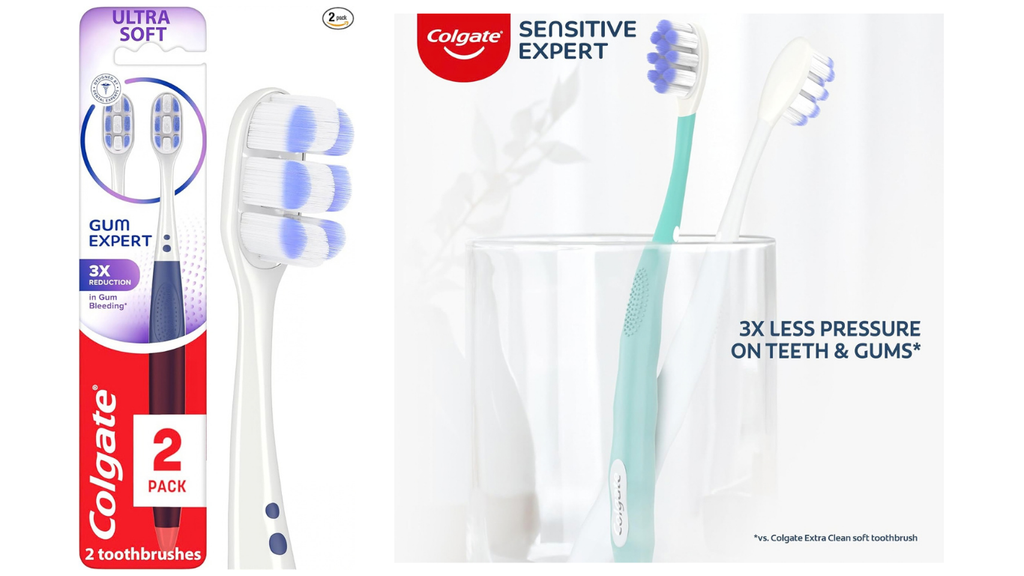
While a sensitive-teeth toothbrush isn’t the solution, a gentle toothbrush will help with everyday brushing.
Features to look for
- Extra-soft bristles
- Gentle cleaning action
- Small or compact head
- Comfortable handle
- Pressure control on electric models
An electric toothbrush with a sensitive mode can also help if you have the habit of brushing aggressively.
9. Toothbrushes for Braces
A toothbrush for braces needs to clean around the brackets, wires, and other orthodontic accessories.
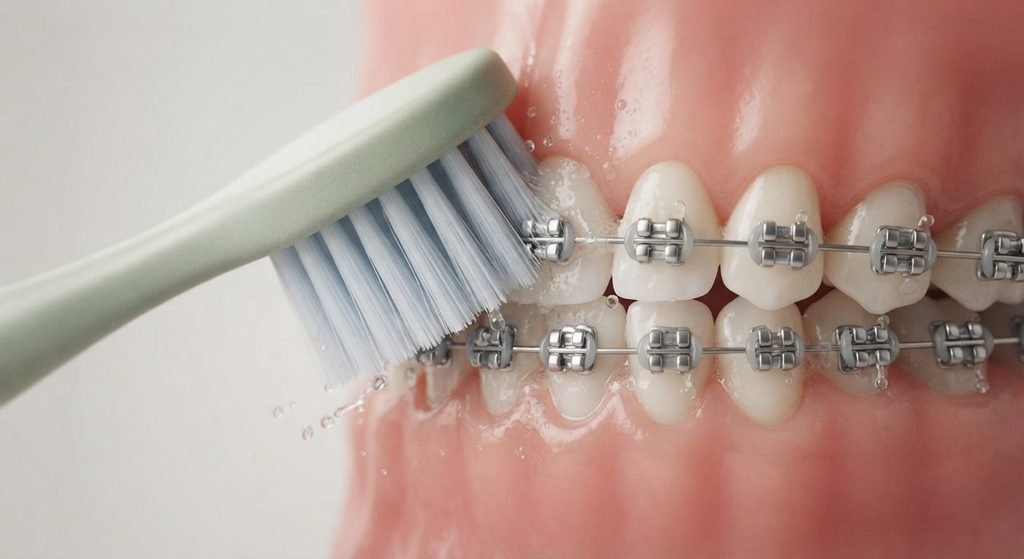
Orthodontic toothbrushes have bristles that help clean above and below brackets. Some people use an electric toothbrush with an appropriate orthodontic or sensitive brush head.
A regular toothbrush can still be useful, but to clean around braces it has to be used more carefully as food and plaque can build up around brackets.
Helpful features for braces
- Small or compact brush head
- Soft bristles
- Orthodontic-friendly design
- Easy access around brackets and wires
- Compatibility with specialized brush heads
Interdental brushes can also complement normal brushing by helping clean between brackets and wires.
10. Children’s Toothbrushes
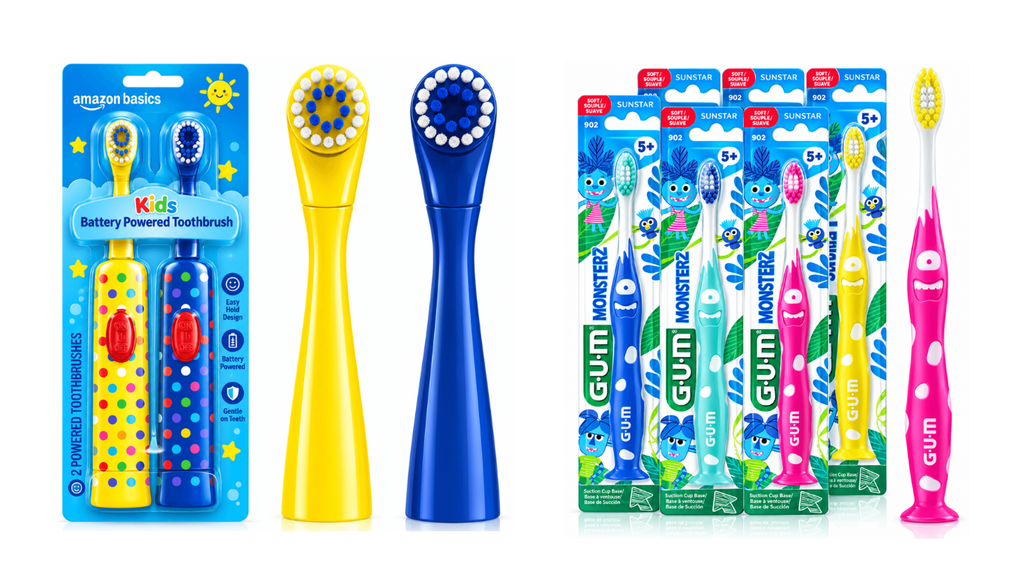
Children need toothbrushes that are suited to their smaller mouths and hands.
A children’s toothbrush typically has a smaller head, softer bristles, and a handle that is easier for a child to grip. Fun colors and character designs can also entice children to brush regularly.
When choosing a children’s toothbrush, don’t go for the smallest adult toothbrush you can find. Look for something designed for the child’s age range..
What to look for
- Small brush head
- Soft bristles
- Easy-to-hold handle
- Age-appropriate design
- Appropriate replacement heads for electric models
Parents should also supervise young children if necessary and encourage good brushing habits..
11. Eco-Friendly Toothbrushes
Eco-friendly toothbrushes are typically designed for a sustainable approach. They might have bamboo handles or use recycled or recyclable materials.
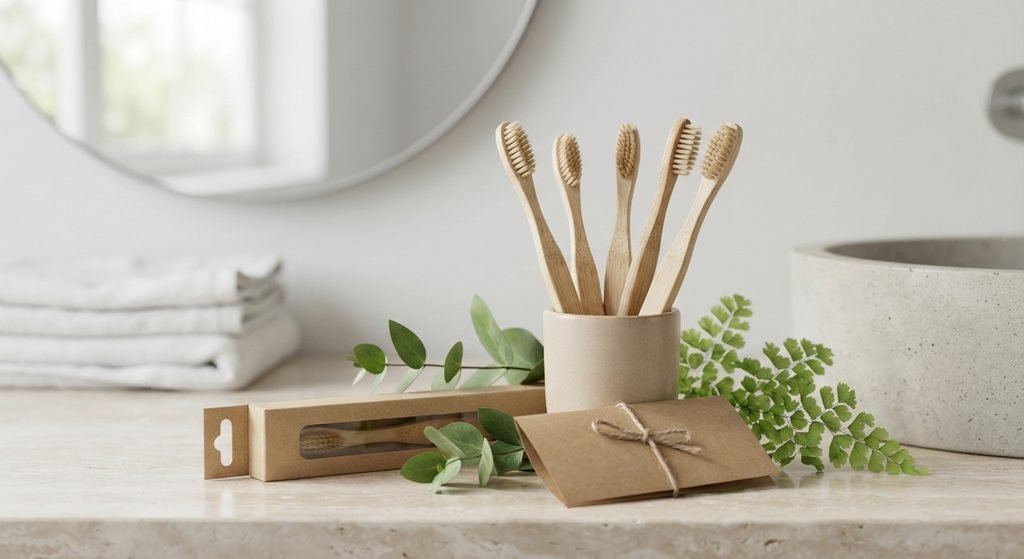
However, “eco-friendly” can mean many things across a range of products. Consider the whole product, including the handle material, bristles, packaging, manufacturing and how the toothbrush can be disposed of.
An environmentally conscious toothbrush can be a good choice if sustainability is an important part of your buying decision, but oral health should always come first.
12. Travel Toothbrushes
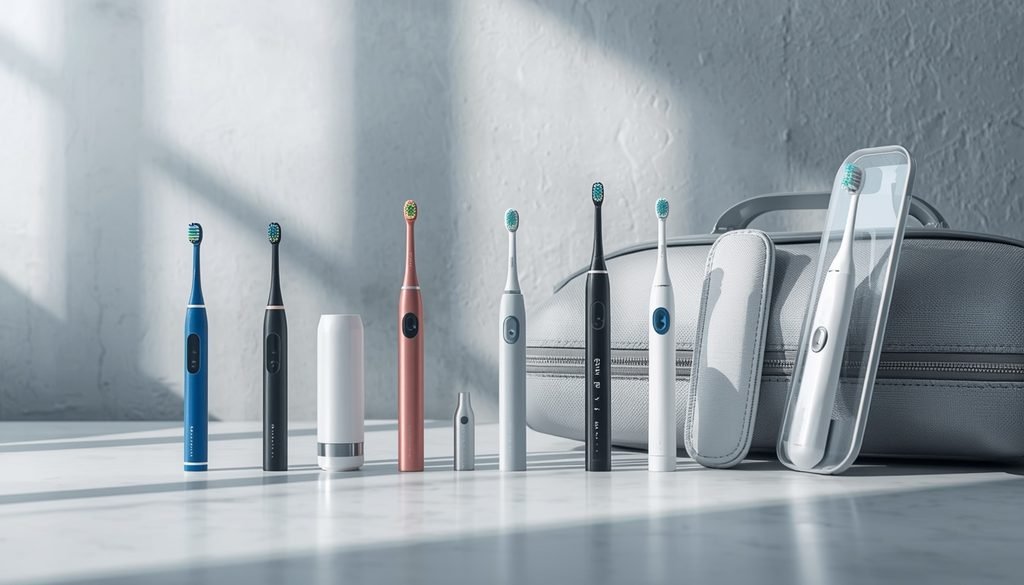
Travel toothbrushes are designed to be compact and easy to carry.
Some have folding handles, protective caps, or compact cases to help keep the brush clean while traveling.
A travel toothbrush doesn’t have to be a special kind of cleaning technology, but the main difference is usually the brush’s size, portability and storage design.
A good travel toothbrush should have
- Compact dimensions
- Protective storage
- A comfortable handle
- Soft bristles
- A design that’s easy to pack
If you use an electric toothbrush while traveling, check the battery life and whether you need to carry a charging cable or travel case.
13. Interdental Toothbrushes
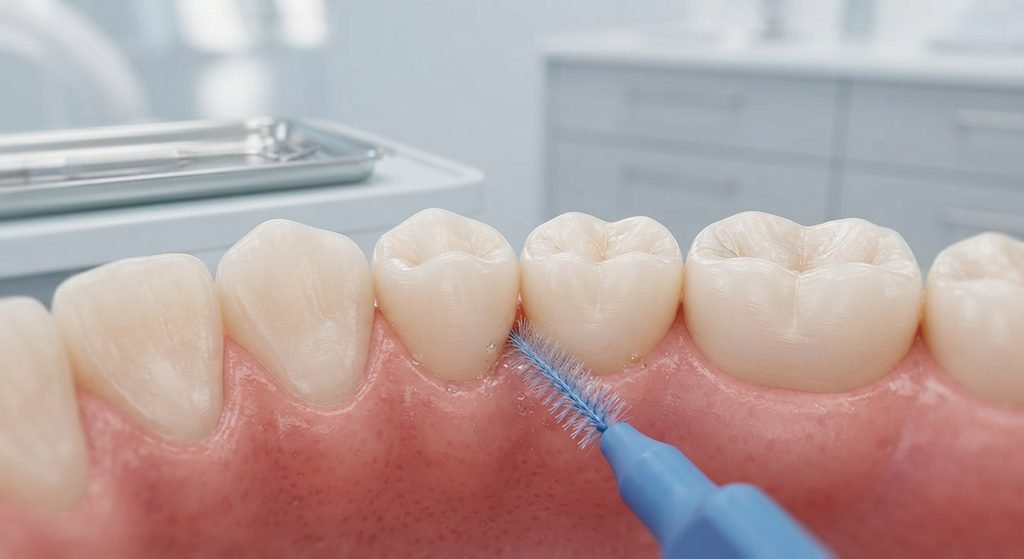
Interdental brushes are different to standard toothbrushes as they’re mainly for cleaning between your teeth and around areas that a regular toothbrush can’t reach.
Interdental brushes are great for cleaning around orthodontic wires, bridges, implants, and wider gaps between teeth.
An interdental brush shouldn’t replace your regular toothbrush, but they can complement normal brushing as part of a complete oral-care routine.
Types of Toothbrushes and Their Uses
Here’s a quick overview of the main toothbrush types and where they may fit into your routine:
| Toothbrush type | Common use |
| Manual toothbrush | Everyday brushing |
| Electric toothbrush | Powered everyday cleaning |
| Sonic toothbrush | High-frequency vibrating brushing |
| Oscillating toothbrush | Small-head powered cleaning |
| Soft-bristle toothbrush | Gentle everyday brushing |
| Medium-bristle toothbrush | Firmer brushing preference |
| Hard-bristle toothbrush | Generally not ideal for routine use |
| Sensitive-teeth toothbrush | Gentle brushing |
| Orthodontic toothbrush | Cleaning around braces |
| Children’s toothbrush | Smaller mouths and hands |
| Eco-friendly toothbrush | Buyers prioritizing sustainability |
| Travel toothbrush | Portable oral care |
| Interdental brush | Cleaning between teeth |
How to Choose the Best Type of Toothbrush
The best type of toothbrush isn’t necessarily the most expensive or technologically advanced – it’s the one you can use correctly and consistently while comfortably brushing your teeth and gumline.
Consider the following factors before buying:
1. Choose soft bristles
For most people, a soft-bristle toothbrush is a sensible starting point. They offer great cleaning potential without the aggressive scrubbing of harder brushes.
2. Consider manual vs electric
The choice between manual vs electric toothbrush comes down to preference, technique, features, and budget.
A manual toothbrush is affordable and simple. An electric toothbrush can provide helpful features such as timers and pressure sensors..
3. Think about your specific needs
Your ideal toothbrush may change depending on your situation.
For example::
- Sensitive teeth: Consider extra-soft bristles and gentle modes.
- Braces: Look for an orthodontic-friendly design and compact head.
- Children: Choose an age-appropriate children’s toothbrush.
- Travel: Prioritize portability and protective storage.
- Limited dexterity: An electric toothbrush may make brushing easier.
- Technology lovers: A feature-rich electric toothbrush may be appealing.
4. Look for a comfortable handle
You should be able to hold the toothbrush comfortably without gripping it too tightly.
5. Consider replacement costs
With electric toothbrushes, don’t just consider the cost of the handle. Look at the cost and availability of replacement brush heads.
How Often Should You Replace a Toothbrush?
A toothbrush gradually becomes less effective as its bristles wear out.
A practical rule is to replace your toothbrush or electric brush head approximately every three months, or sooner if the bristles become worn, damaged, or frayed.
If your bristles are spreading in multiple directions, that’s a sign your brush needs replacing.
Which Toothbrush Type Is Right for You?
There isn’t one toothbrush that suits everyone.
For simple everyday use, a soft-bristle manual toothbrush is a great starting point. If you prefer powered brushing or want features such as a timer and pressure sensor, consider an electric toothbrush.
A sonic toothbrush may be a good choice for people that prefer high frequency vibrations, while an oscillating toothbrush is worth considering if you like a small, round brush head.
For special circumstances, choose based on your needs. A person with sensitive teeth may prefer extra-soft bristles, while someone with braces may benefit from an orthodontic toothbrush or specialized brush head.
The important thing is not simply choosing a particular technology. Good brushing technique, consistency, and regular dental care are all essential.
Common Mistakes When Choosing a Toothbrush
Even though many consumers know the basic toothbrush types, mistakes can still happen.
Avoid:
- Choosing hard bristles just because they feel stronger
- Buying a brush head that is too large
- Ignoring comfort and grip
- Pressing too hard while brushing
- Choosing an electric toothbrush without checking replacement-head costs
- Buying children’s brushes that are too large
- Assuming more features automatically mean better cleaning
The right toothbrush is one that you can comfortably use with good technique.
Frequently Asked Questions
1. What are the main types of toothbrushes?
The main types of toothbrushes include manual, electric, sonic, oscillating, soft-bristle, medium-bristle, children’s, orthodontic, sensitive-teeth, travel, eco-friendly, and interdental brushes.
2. What is the best type of toothbrush for most people?
For most people, a soft-bristle toothbrush is a practical choice for everyday brushing. You can choose either a manual or electric toothbrush, depending on your preferences, brushing habits, budget, and desired features.
3. Is a sonic toothbrush better than an oscillating toothbrush?
Both are types of electric toothbrushes that use different cleaning movements. A sonic toothbrush uses rapid vibrations, while an oscillating toothbrush uses a small moving brush head. The right choice comes down to your preferences and how comfortably you can use it.
4. What type of toothbrush is best for sensitive teeth?
A toothbrush with soft or extra-soft bristles and a gentle brushing action is generally a good option for people with sensitive teeth. If you continue to experience sensitivity, speak with a professional to determine its cause.
5. What type of toothbrush is best for braces?
A toothbrush with soft bristles and a compact or orthodontic-friendly head can make cleaning around brackets and wires easier. Interdental brushes can also help with cleaning difficult-to-reach areas.
6. Are hard-bristle toothbrushes better at cleaning teeth?
Not necessarily. Hard bristles don’t automatically provide better cleaning. For everyday use, soft bristles are generally a more comfortable and forgiving option, especially if you brush aggressively.
Conclusion
Understanding the types of toothbrushes makes it much easier to select the one that works best for your oral-care routine. From simple manual brushes to sonic and oscillating electric ones, there’s an option for almost every preference and situation.
For most people, it can often just come down to three questions: Do you prefer manual or electric brushing? Do you need a specialized design? And which bristle type is comfortable without requiring too much pressure?
If you’re buying your first toothbrush, a soft-bristle model is a sensible starting point. If you want additional features, look into electric, sonic, and oscillating toothbrushes. And if you have braces, sensitive teeth, or other specific needs, look for a toothbrush that addresses those requirements.
Ultimately, the best type of toothbrush is the one that you can comfortably use with good technique. Choose the features that genuinely help you – and don’t pay extra just for features you won’t use..
Best Electric Toothbrushes
Compare electric toothbrushes, features, and buying options.
Best Manual Toothbrushes
Explore soft-bristle brushes and everyday options.
Manual vs Electric Toothbrush
Understand the differences, benefits, and costs.