
Discover the best electric toothbrushes for adults. Compare sonic vs oscillating, features, prices, and buying tips to find out the best toothbrush.
Finding the best electric toothbrush is not only about money. The ideal electric toothbrush will help you to clean your teeth more thoroughly, care for your gums, fit your needs, and budget.
An electric toothbrush can be helpful to people who have difficulties with manual brushing and want to establish good oral hygiene. Besides, modern electric toothbrushes often have built-in timers, pressure sensors, several brushing modes, rechargeable batteries, and a reminder for replacing heads.
However, according to the American Dental Association (ADA), both powered and manual toothbrushes can effectively remove plaque with proper brushing technique. The ADA recommends brushing your teeth at least two times a day for two minutes with a soft-bristled toothbrush.
So what makes the best electric toothbrush different and worth the money?
This guide will tell you what to look for when buying an electric toothbrush, how long to brush with it, how to care for it, what features are essential, and how sonic toothbrushes differ from oscillating ones.
What Is the Best Electric Toothbrush?
The best electric toothbrush is the one that helps you to maintain good oral hygiene without overcomplicating daily routines.
It is not about a toothbrush’s motor, modes, and applications but a thorough cleaning of all the teeth surfaces and proper gum care.
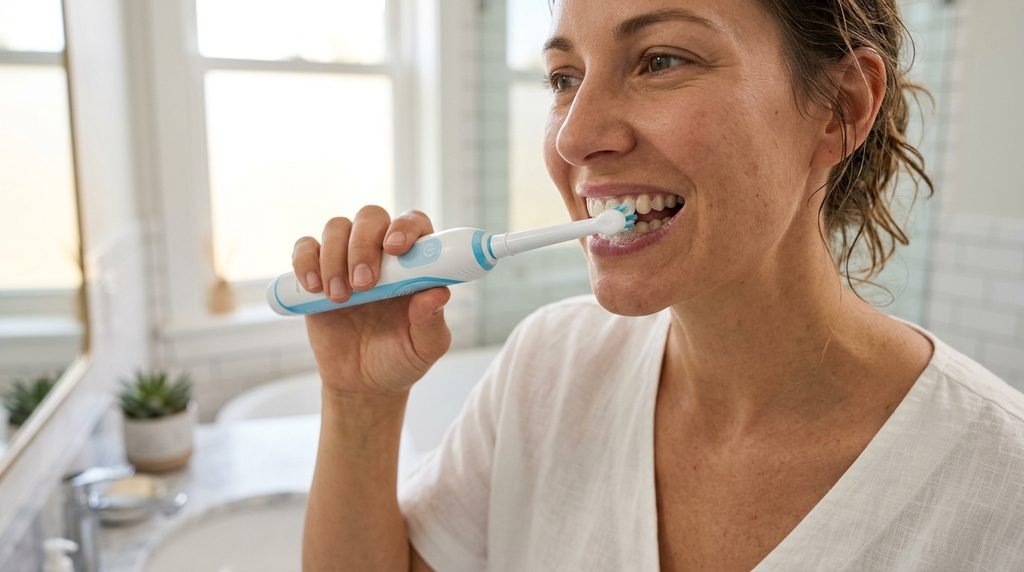
Therefore, it is essential to consider features like battery power, brushing modes, a brush head that will suit your needs, and a smart toothbrush app if you want to monitor your oral health.
Besides, many electric toothbrushes allow you to replace worn-out bristles every three months or after 150 uses (the average toothbrush person brushes 120 times a year).
Cleaning performance
- Soft-bristle brush-head availability
- Comfortable handle design
- Two-minute timer
- Pressure sensor
- Battery life
- Replacement-head cost
- Waterproof construction
- Cleaning modes
- Warranty and reliability
- Overall price
For many adults, a simple electric toothbrush with a two-minute timer and a pressure sensor is a must-have.
More expensive models provide clever tracking, various modes, screens, Bluetooth connectivity, and more, but these are all extras.
What Should You Look for in an Electric Toothbrush?
When choosing the best electric toothbrush for your needs, focus on features that will help you brush your teeth better.
An electric toothbrush should have :
A two-minute timer:
This helps you brush for the recommended amount of time. Many models divide the two minutes into intervals so you know when to move to another section of your mouth.
A pressure sensor:
A pressure sensor can warn you when you are brushing too aggressively. This is particularly useful if you tend to press hard against your teeth and gums.
Soft bristles:
Soft bristles are generally recommended because they clean effectively while helping minimize unnecessary abrasion to the gums.
Affordable replacement heads:
A toothbrush may appear inexpensive initially but become expensive if replacement heads cost significantly more than the handle.
A comfortable grip:
You should be able to control the toothbrush without squeezing the handle tightly.
A dependable battery:
Rechargeable models are convenient when they can last several days between charges.
Best Electric Toothbrush Types
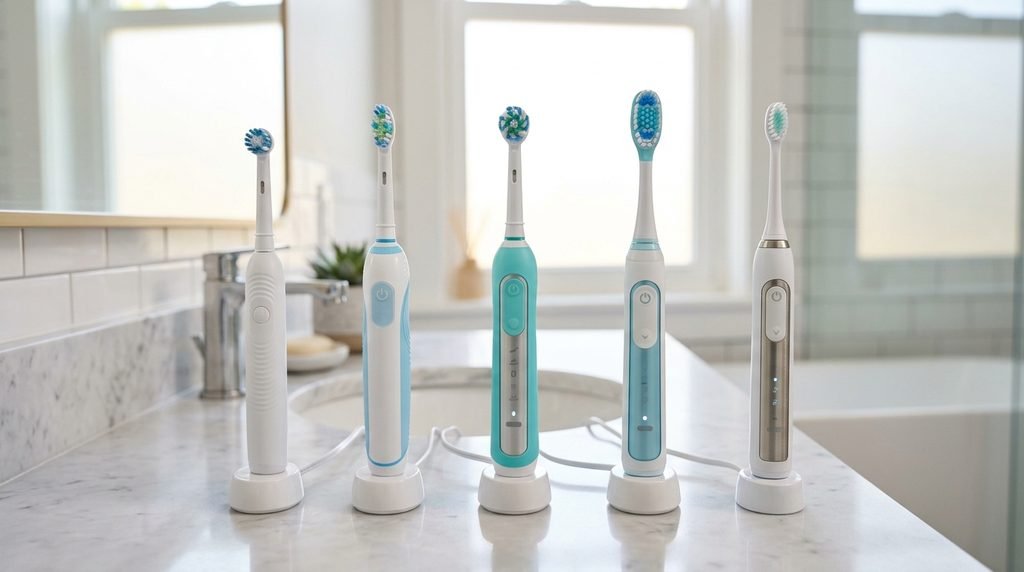
Different Kinds of Electric Toothbrushes: Which Is the Best?
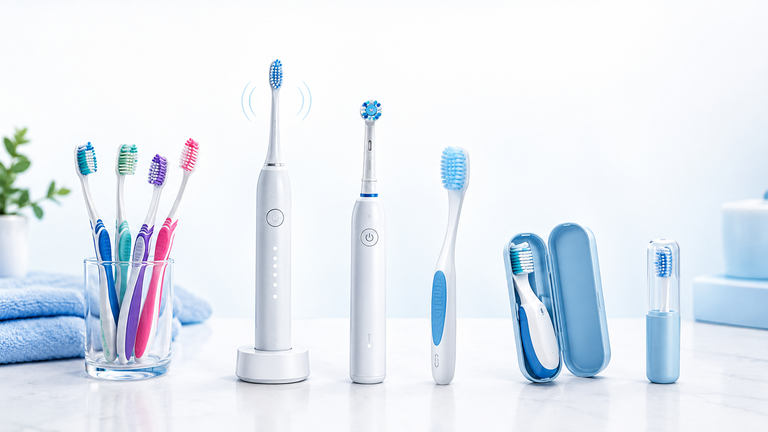
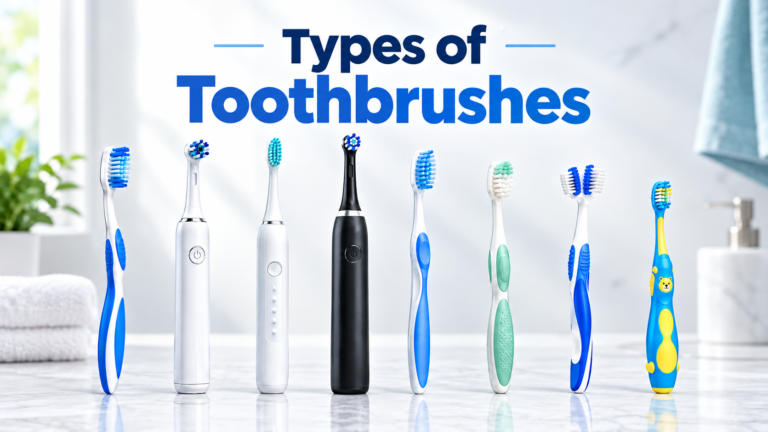
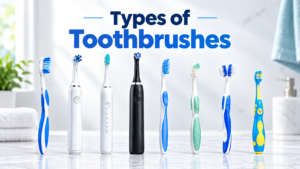
Electric toothbrushes have various kinds of movements. The two most popular are sonic toothbrushes and oscillating-rotating toothbrushes.
Sonic Electric Toothbrushes
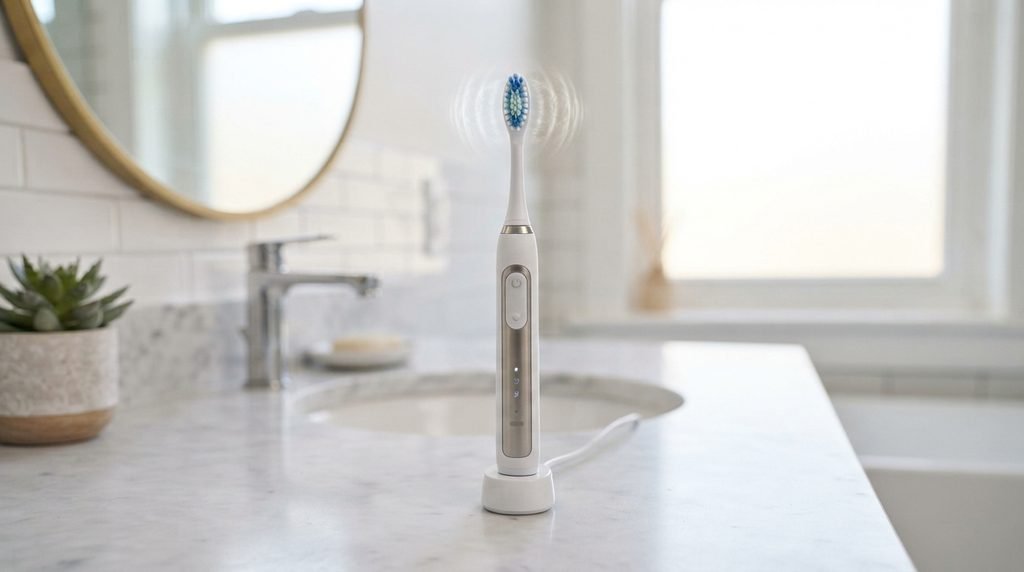
Sonic toothbrushes move in a side-to-side motion to clean the teeth and massage the gums.
Their brush head is usually larger and more elongated than the one on a regular toothbrush, making it more familiar to the user .
Key Features
Common sonic toothbrush features include:
- High-frequency brush movement
- Long, traditional-shaped brush heads
- Brushing intensity variations
- Two-minute timers
- Sensors that alert the user to excessive pressure
- Replaceable rechargeable batteries
- Sensitive or gum-care modes
Pros
- More familiar shape of the brush head
- Provides good coverage for multiple teeth
- Most have sensitive cleaning modes
- Many have a built-in option for recharging
- A good choice for those who like the sensation of a sweeping motion
Cons
- May cause discomfort for some users
- Top-tier models can be quite pricey
- The purchase of a separate brush-head may be necessary over time
- Some features may prove to be superfluous
Some features may prove to be superfluous
Sonic toothbrushes can be a great option for those who are used to standard toothbrushes and want the convenience of a powered cleaning action without the small, round head of many other electric toothbrushes.
Oscillating-Rotating Electric Toothbrushes
Oscillating-rotating toothbrushes typically have a small, rounded head that rotates back and forth in a circular motion across individual teeth.
This motion encourages users to focus on one area at a time, as opposed to sweeping the entire brush across multiple teeth.
A summary of research done by Cochrane found that toothbrushes powered by a rotation-oscillation action decreased plaque and gingivitis compared to manual brushing, in the studies reviewed.
The ADA also lists several Oral-B oscillating-rotating-pulsating toothbrushes that have received their Seal of Acceptance for specific claims regarding plaque and gingivitis reduction.
Key Features
Depending on the model, you can get several useful functions:
- These include small brush heads
- oscillating motion
- Pressure sensors
- Two-minute timers
- Sensitive modes
- Gum-care modes
- Whitening modes
- Rechargeable batteries
- Smart brushing feedback
Pros
- The small head allows for excellent cleaning of each individual tooth
- There is solid research behind rotation-oscillation movements
- Most have built-in pressure control,
- there is a wide variety of brush heads to choose from
Cons
- You might need to get used to the feel of the brush
- Higher-end models can be pricey
- You will need to buy a supply of brush heads eventually,
- the small head size means you have to work around your mouth more
How to Choose an Electric Toothbrush
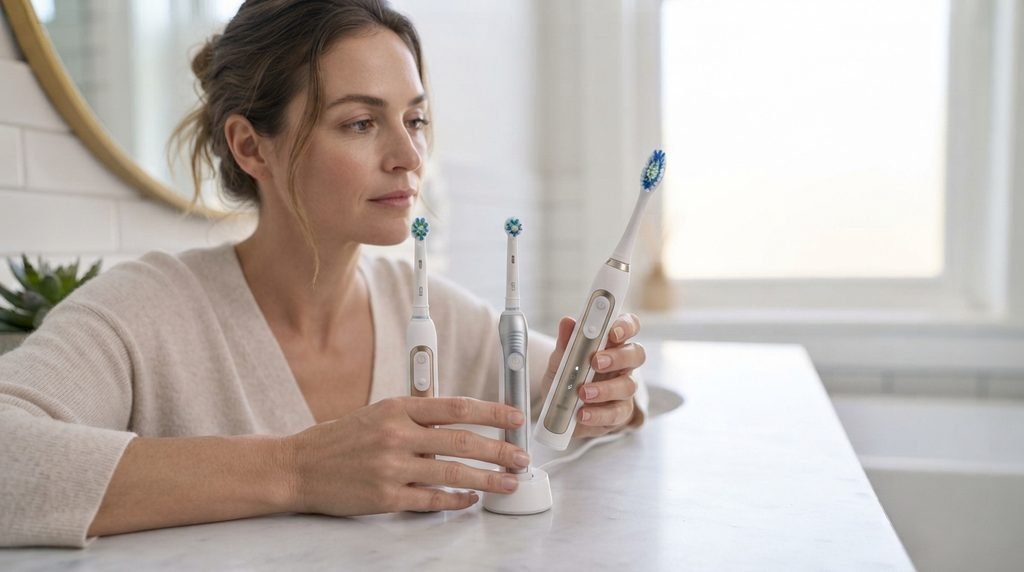
There is no best electric toothbrush for all patients. You need to consider your brushing habits, oral-health requirements, and budget.
1. Consider Your Brushing Technique
If you find yourself rushing while brushing, or skipping difficult spots, you might want to invest in a toothbrush that has a timer.
If you have a tendency to brush too hard, a pressure sensor may be one of the most valuable features you can find.
If you already have great brushing habits, don’t feel like you need the fanciest smart toothbrush on the market.
The point is not to have the fanciest toothbrush, but rather to ensure you’re brushing your teeth effectively.
2. Choose a Comfortable Brush Head
Brush-head design matters.
The ADA recommends soft bristles because they help minimize the risk of gingival abrasion.
Consider a brush head that allows you to comfortably reach:
- Back molars
- Gumlines
- Areas behind front teeth
- Hard-to-reach surfaces
- Crowded teeth
If you have braces, dental restorations, sensitive teeth, or any other issues, speak to your dentist about what sort of brush head is best for you.
3. Look for a Pressure Sensor
One of the most useful features available for electric toothbrushes is a pressure sensor.
Rather than guess how hard you’re pressing, the toothbrush can alert you when you’re using too much pressure, which could damage your teeth and gums..
4. Check Replacement-Head Prices
When choosing your electric toothbrush, remember that you will likely need to buy replacement heads eventually.
The ADA recommends replacing your toothbrush every 3-4 months, or when you notice fraying on the bristles..
Before buying an electric toothbrush, check:
- Replacement-head price
- Availability in your area
- Number of heads included
- Compatible head types
- Whether third-party heads are available
A cheaper toothbrush with expensive replacement heads may cost more over several years than a slightly more expensive model with affordable refills.
How Long Should You Use an Electric Toothbrush?
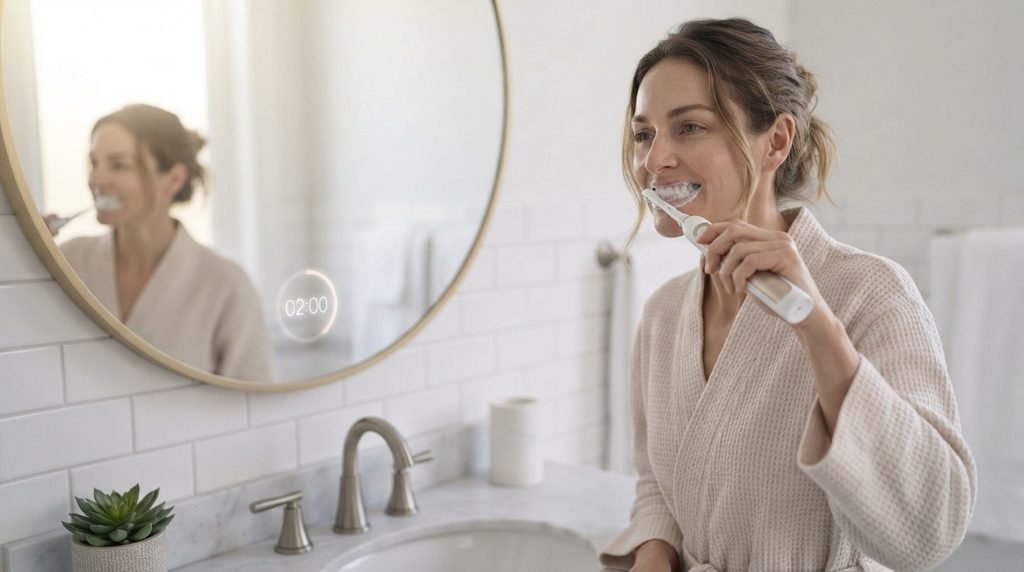
The standard recommendation is to brush your teeth for two minutes, twice a day.
That means an effective routine generally consists of:
Morning: 2 minutes
Evening: 2 minutes
Many electric toothbrushes include an automatic two-minute timer.
Some divide the brushing session into four 30-second sections, encouraging you to spend approximately equal time on each part of your mouth.
Should You Brush Longer Than Two Minutes?
Brushing longer does not necessarily mean better cleaning.
Instead of simply extending brushing time, focus on coverage and technique.
Move the brush systematically around your mouth and pay attention to the gumline and areas that are easy to miss.
If you have specific dental concerns, follow your dentist’s instructions rather than assuming that longer brushing is better.
How to Clean an Electric Toothbrush
Cleaning your electric toothbrush is important because the brush head remains in a warm, moist environment after brushing.
Fortunately, maintaining an electric toothbrush is straightforward.
Step 1: Rinse the Brush Head
After brushing, thoroughly rinse the bristles under running water.
This removes toothpaste residue and loosened debris.
Step 2: Remove Excess Water
Shake off excess water and place the toothbrush somewhere where the brush head can air-dry.
Avoid immediately covering a wet brush head unless the manufacturer’s instructions specifically recommend doing so.
Step 3: Store It Upright
Whenever possible, keep the toothbrush upright in an open area.
Avoid storing the brush head where it is constantly touching other toothbrushes.
Step 4: Replace the Brush Head
Replace the brush head approximately every three to four months or earlier if the bristles become frayed or damaged.
Do You Need a Toothbrush Sanitizer?
Not necessarily.
The ADA notes that toothbrushes can harbor bacteria, but there is no evidence that these bacteria normally cause adverse health effects.For most people, rinsing the brush head and allowing it to air-dry is a practical approach.
Electric Toothbrush Features Explained
Electric toothbrush manufacturers often use different terminologies to refer to the same features. Therefore, here is a list and detailed description of the most common electric toothbrush features.
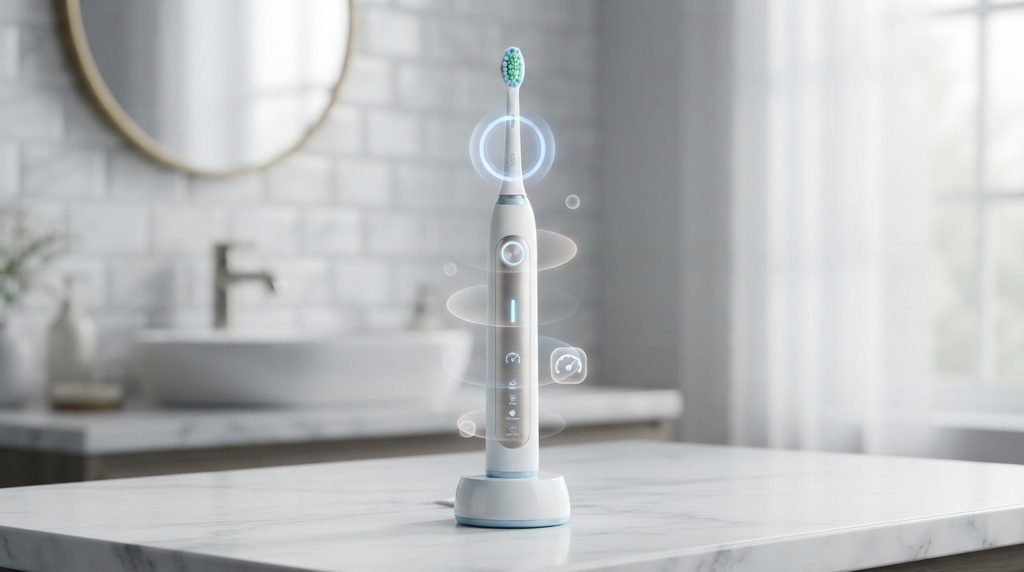
Two-Minute Timer
The two-minute timer serves to remind a person brushing their teeth that they have reached the recommended two minutes of brushing.
Is it worth it? The feature is cheap to implement and super useful.
QuadPacer or 30-Second Intervals
It is a helpful reminder that the two minutes of brushing your teeth have been divided into quarters.
Is it worth it? Yes, if you are the type of person that brushes some areas for too long.
Pressure Sensor
A pressure sensor is a built-in feature in some electric toothbrushes that reminds users to reduce the pressure applied while brushing.
Is it worth it? Yes, if you are not one of those people who always brush their teeth too hard.
Multiple Cleaning Modes
Common modes include:
- Daily Clean
- Sensitive
- Gum Care
- Whitening
Is it worth it? It can be handy, but it is not mandatory. A good electric toothbrush will have a standard cleaning mode suitable for the average user.
Bluetooth and Smartphone Apps
Higher-end electric toothbrushes come with smartphone apps that sync with the toothbrush and track information about the user’s brushing habits.
Is it worth it? It depends on whether you are the type of person who will actually use the accompanying app.
If you do not use the app, all the syncing data will be a waste of time and energy. A smart electric toothbrush with a smartphone app is only worth it if you are the type of person who will interact with it consistently.
Travel Case
Most electric toothbrushes, especially the high-end ones, come with a travel case.
Is it worth it or not? It depends on how often you travel/
Battery Indicator
It is a handy tool that indicates the battery level of your electric toothbrush.
Is it worth it or not? It is super convenient, especially for travelers..
Rechargeable vs Battery Electric Toothbrush
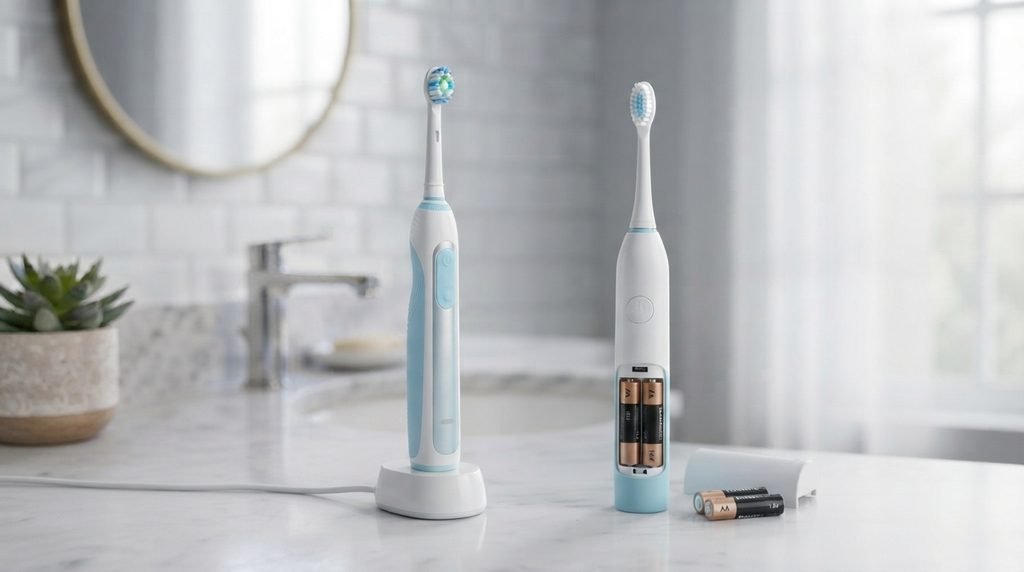
When choosing an electric toothbrush, you will usually encounter two power options: rechargeable and replaceable-battery models.
Rechargeable Electric Toothbrush
When shopping for an electric toothbrush, you will most likely stumble upon two main types of electric toothbrushes: rechargeable and battery toothbrushes..
Pros
- Convenient for everyday use
- No need to buy disposable batteries
- Often available with advanced features
- Usually better suited to long-term daily use
Cons
- Higher initial price for some models
- Requires charging
- Internal battery may eventually lose capacity
- Chargers can be inconvenient when traveling
Battery-Powered Electric Toothbrush
Battery-powered toothbrushes use replaceable batteries.
Pros
- Often inexpensive
- Easy to travel with
- No charging station required
- Batteries can be replaced quickly
Cons
- Requires replacement batteries
- May have fewer advanced features
- Ongoing battery costs
- Some models provide less sophisticated controls
Which Is Better?
For most adults who use an electric toothbrush every day, a rechargeable electric toothbrush is usually the more convenient long-term option.
A battery-powered toothbrush can make more sense if you want a simple, inexpensive option or frequently travel to places where charging is inconvenient.
Sonic vs Oscillating Toothbrush: Which Is Better?
The debate between sonic vs oscillating toothbrushes does not have a simple winner for every person.
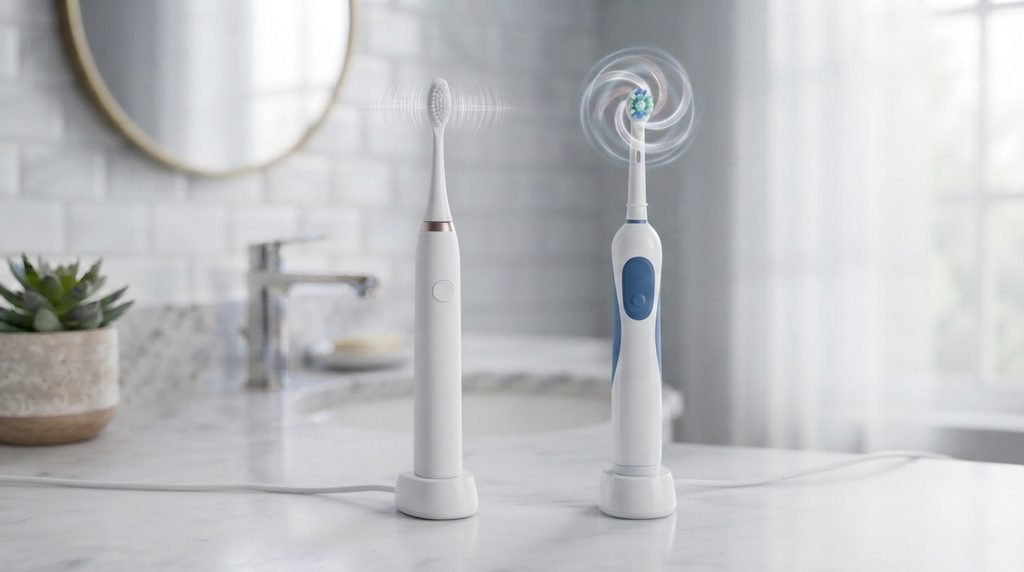
Both technologies can provide effective powered brushing when used correctly.
The key difference is how the brush head moves.
| Feature | Sonic | Oscillating-Rotating |
| Brush-head shape | Usually elongated | Usually round |
| Movement | Rapid side-to-side | Rotates back and forth |
| Brushing approach | Sweeping/covering areas | Tooth-by-tooth |
| Pressure sensors | Common | Common |
| Timers | Common | Common |
| Best for | People who prefer traditional shapes | People who like focused cleaning |
| Replacement heads | Model dependent | Model dependent |
That does not mean everyone should automatically choose an oscillating toothbrush.
Comfort, technique, consistency, replacement-head availability, and cost all matter.
Choose Sonic If:
A sonic toothbrush may be right for you if:
- You prefer a traditional-shaped brush head
- You like a sweeping brushing sensation
- You want broad coverage
- You prefer gentle cleaning modes
- You find elongated heads easier to maneuver
Choose Oscillating-Rotating If:
An oscillating toothbrush may suit you if:
- You like cleaning individual teeth
- You want a small round brush head
- You want a toothbrush design with strong supporting evidence
- You appreciate detailed pressure feedback.
Best Electric Toothbrushes for Different Budgets
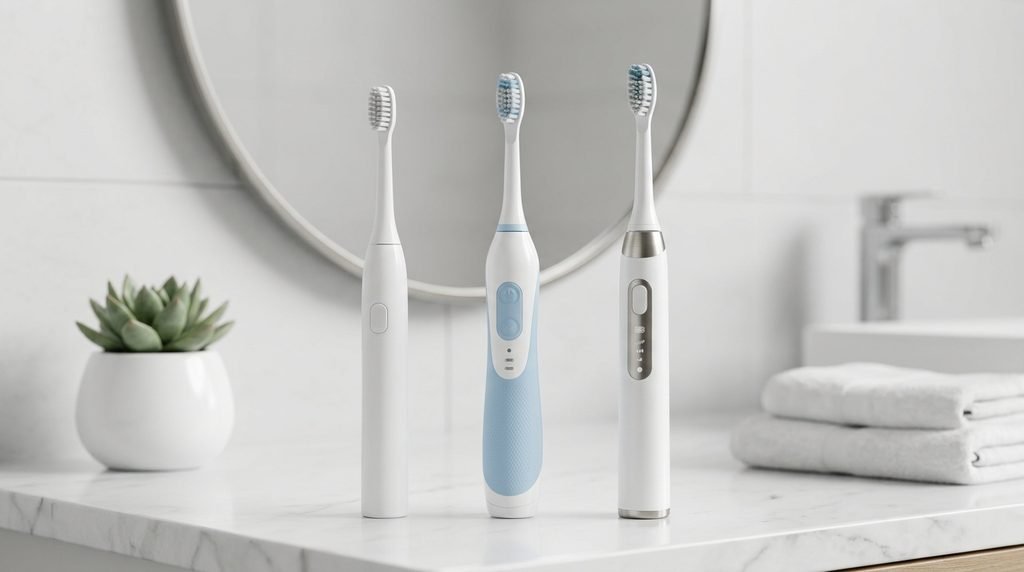
You don’t have to spend hundreds of dollars on a good electric toothbrush.
Here are some important features to look for in each type of electric toothbrush.
Best Budget Electric Toothbrush
A budget model should prioritize:
- two-minute timer
- soft bristles
- powerful motor
- not too expensive heads
- ergonomic handle
you can skip the fancy features that you won’t really use in order to save money.
Best Mid-Range Electric Toothbrush
Mid-range toothbrushes should have important features such asr:
- Pressure sensor
- Multiple cleaning modes
- Rechargeable battery
- Travel case
- Good replacement-head availability
- Long warranty
They give you the best value per dollar spent, and are the best choice for most adults who want something with a nice set of features, but don’t want to spend too much money.
Best Premium Electric Toothbrush
Premium models may include:
- Smartphone connectivity
- Detailed brushing feedback
- Multiple intensity settings
- Advanced pressure monitoring
- Premium charging stations
- Displays
- Multiple specialized cleaning modes
These features can be useful for people who enjoy tracking their brushing habits, but they should not be confused with the basic requirements for effective brushing.
The ADA’s current powered-toothbrush listings include products from several manufacturers and technologies, showing that there is more than one legitimate approach to powered brushing
Common Electric Toothbrush Buying Mistakes
Buying the Most Expensive Model
The fact that something is more expensive does not necessarily mean that it is more useful for you.
If you only need a timer and a pressure sensor, the app’S advanced functions will be useless to you.
Calculating the Cost of Replacement
Always remember to calculate how much you will have to spend on the replacement of brush heads.
Brushing Too Hard
An electric toothbrush is intended to do most of the hard work for you, so try not to press too hard. A pressure sensor will remind you to relax.
Looking for Unnecessary Features
A toothbrush that offers you 10 different modes may sound impressive, but in reality, you will probably only use one or two of them.
Not Paying Attention to Comfort
A toothbrush that is uncomfortable to hold or has an unpleasant brushing sensation will put you off using it. Comfort should be a key consideration when buying an electric toothbrush..
Electric Toothbrush Buying Checklist
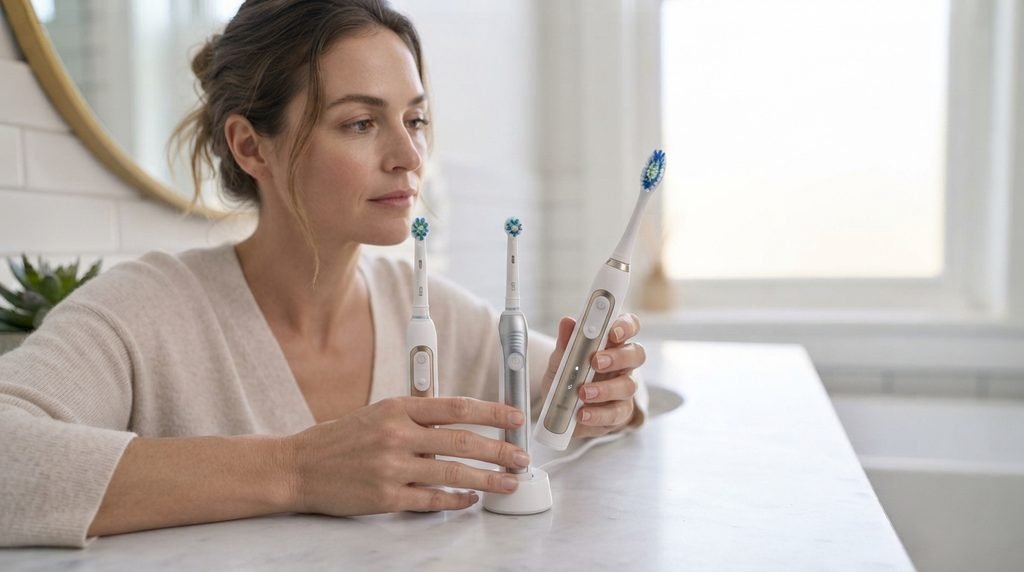
Before purchasing an electric toothbrush, ask yourself:
Cleaning
- Does it provide effective powered brushing?
- Does it have soft-bristle options?
- Is the brush head comfortable?
Protection
- Does it have a pressure sensor?
- Does it have a two-minute timer?
Convenience
- Is it rechargeable or battery-powered?
- How long does the battery last?
- Does it include a travel case?
Long-Term Cost
- How much do replacement heads cost?
- Are replacement heads easy to find?
- Is the warranty reasonable?
Personal Preferences
- Do you prefer sonic or oscillating movement?
- Do you want multiple cleaning modes?
- Will you actually use a smartphone app?
If a toothbrush performs well across these categories, it can be a strong candidate regardless of its price.
Frequently Asked Questions About Electric Toothbrushes
Are electric toothbrushes better than manual toothbrushes?
Both manual and powered toothbrushes can be effective for plaque removal when used properly. Evidence suggests that powered toothbrushes, especially rotation-oscillation toothbrushes, can offer benefits over manual brushing for plaque and gingivitis outcomes.
How often should you use an electric toothbrush?
It is recommended that most people brush their teeth twice per day for two minutes per session..
How long does an electric toothbrush last?
The handle of the toothbrush can last for many years depending on the type, battery life, build quality, and care. However, the brush head should be replaced roughly every three to four months or when it begins to wear down.
Is a sonic toothbrush better than an oscillating toothbrush?
There is no one best type of powered toothbrush. Rotation-oscillation toothbrushes have shown efficacy in reducing plaque and gingivitis compared to manual brushing while sonic toothbrushes can also be effective. It is important to find what type of powered toothbrush you feel most comfortable using.
Are expensive electric toothbrushes worth it?
Not always. A cheaper toothbrush with timers, pressure sensors, a nice brush head, and affordable brush heads can be just as good as an expensive one with all the stops and features that you will not use.
Can an electric toothbrush damage your gums?
Brushing too hard can cause gum recession and irritation, but using a soft brush and not applying too much pressure can prevent this from happening. Using a toothbrush with a built-in pressure sensor can also help if you have a habit of brushing too hard.
Can I use an electric toothbrush with braces?
Power toothbrushes can be a good option for people with dental appliances like braces, but it depends on the person’s situation. If you have braces it is a good idea to consult with your dentist or orthodontist about what type of power toothbrush you should use. The American Dental Association does note that power toothbrushes can be a good option for some people with dental appliances.
Conclusion: Finding the Best Electric Toothbrush for You
The best electric toothbrushes do not necessarily mean the most expensive, quickest, or most technologically advanced. The best electric toothbrush is the one that helps you achieve a good oral hygiene routine.
Most adults will want to start with something simple, have soft bristles, a built-in two-minute timer, comfortable, and have the proper cleaning without breaking the bank.
Another essential feature is the pressure sensor, and if you are not sure if you are brushing your teeth too hard, this is probably the option to choose. If you are trying to decide between oscillating and sonic toothbrushes, think about the sensation you like more, and remember that rotation-oscillation toothbrushes have proven to be the most effective in reducing plaque and gingivitis compared to manual brushes.
Remember that the best electric toothbrush is the one you can actually use twice a day correctly.