Sonic vs Oscillating Toothbrush: Compare cleaning action, benefits, features, and prices to find the best electric toothbrush for your oral care needs.
Are you a consumer shopping for electric tooth brushes on sites like Amazon and can’t seem to decide between the oscillating and sonic toothbrushes in the vast selection? Do you know that most others shopping for these products feel the same way but the labels on the packages don’t particularly help them decide which one to buy?
This guide Sonic vs Oscillating Toothbrush will help you save time and money by making it easier for you to identify what to buy based on which cleaner you desire to achieve a sparkling clean mouth
Whether you’re an electric toothbrush virgin that is shopping to buy their first ever toothbrush ,or looking to upgrade from a manual toothbrush or from another type of electric toothbrush ,Sonic vs Oscillating Toothbrush this article will give you enough information to enable you to make a simple decision.
We’ll go over the different functions of the two types of toothbrushes, show you how to use them, compare their efficiency in terms of the percentage of clean they give, and even help you determine which one is better for your needs and financial capabilities.
Sonic vs Oscillating Toothbrush Works
How Sonic Toothbrushes Generate Cleaning Power
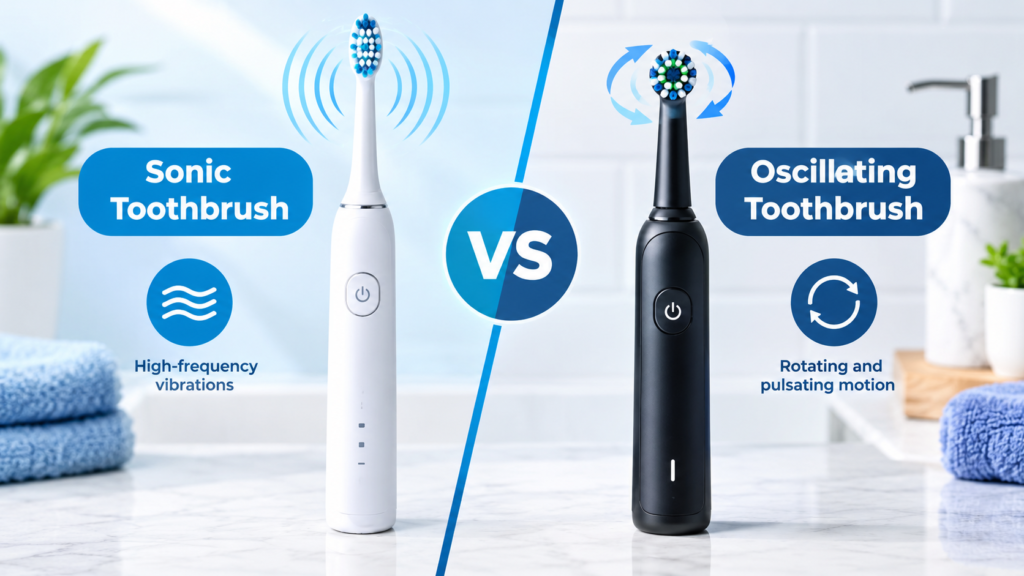
Sonic toothbrushes perform cleaning action through high speed movements of the brush head (31,000 to 40,000 brush strokes per minute) and have fluid dynamics going on which cause cleaning action of the saliva and toothpaste beyond the bristles.
How Oscillating Toothbrushes Move and Clean
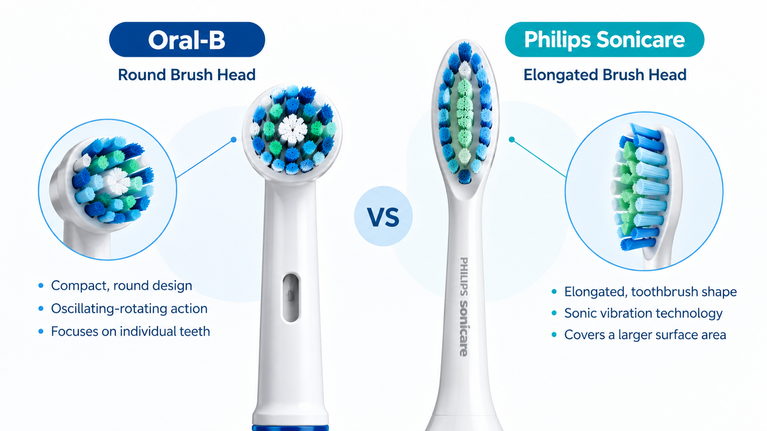
Oscillating toothbrushes perform a rotating motion (2500-8000 rotations per minute) and some also have a pulsating action which causes mechanical scrubbing on the tooth surfaces. Some also rotate in a small circular motion in order to clean the individual tooth with a small round brush head.
Now that we’ve understood how they work let us look at the differences between the two toothbrushes.
Key Mechanical Differences Between the Two
| Feature | Sonic | Oscillating |
| Motion type | Linear vibration | Rotating back-and-forth |
| Speed | 31,000–40,000 strokes/min | 2,500–8,000 rotations/min |
| Brush head shape | Elongated | Small, round |
| Fluid cleaning action | Yes | Minimal |
| Contact cleaning | Broad strokes | Tooth-by-tooth |
The main difference between the two is the mechanism that they use to remove plaque.
Comparing Cleaning Performance and Effectiveness
Plaque Removal Capabilities of Each Brush
Both brush types outperform manual brushing, but they work differently:
| Feature | Sonic | Oscillating |
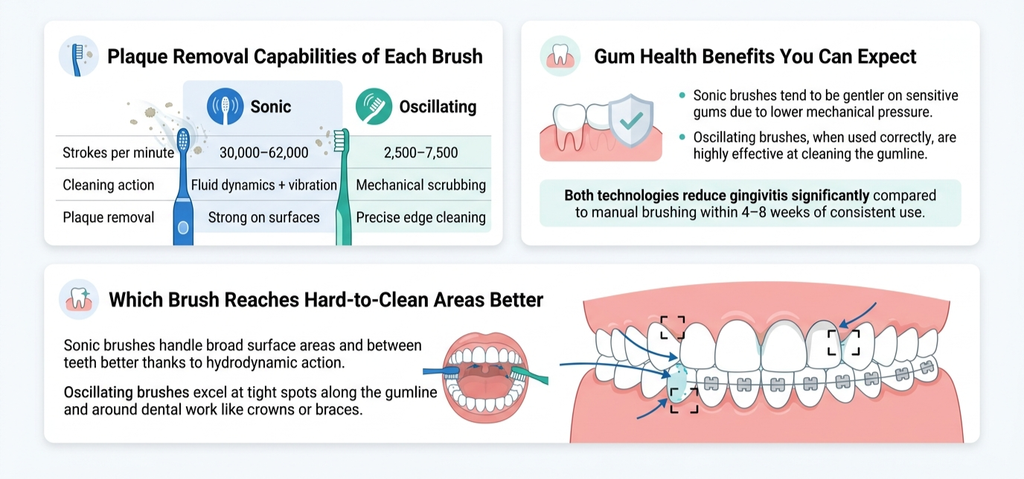
| Strokes per minute | 30,000–62,000 | 2,500–7,500 |
| Cleaning action | Fluid dynamics + vibration | Mechanical scrubbing |
| Plaque removal | Strong on surfaces | Precise edge cleaning |
Oscillating brushes physically scrub plaque away through rotation. Sonic brushes create fluid waves that disrupt plaque even beyond where bristles touch.
Gum Health Benefits You Can Expect
The sonic toothbrushes are generally less harsh on the gums and the oscillating ones are very efficient at cleaning along the gum line.
Both types Sonic vs Oscillating Toothbrush are very efficient at reducing gum inflammation after about four to eight weeks of use compared to a manual toothbrush.
Which Brush Reaches Hard-to-Clean Areas Better
Sonic brushes clean more efficiently on a broad scale whereas the oscillating ones are better at cleaning along the gum and other narrow areas.
Clinical Evidence Supporting Each Technology
- Oscillating (Oral-B): Consistently strong clinical backing, including Cochrane Review data showing superior plaque and gingivitis reduction
- Sonic (Philips Sonicare): Multiple peer-reviewed studies confirm comparable plaque removal with better interdental fluid activity
Both are clinically validated; neither is a clear loser.
Identifying the Best Brush for Your Dental Needs
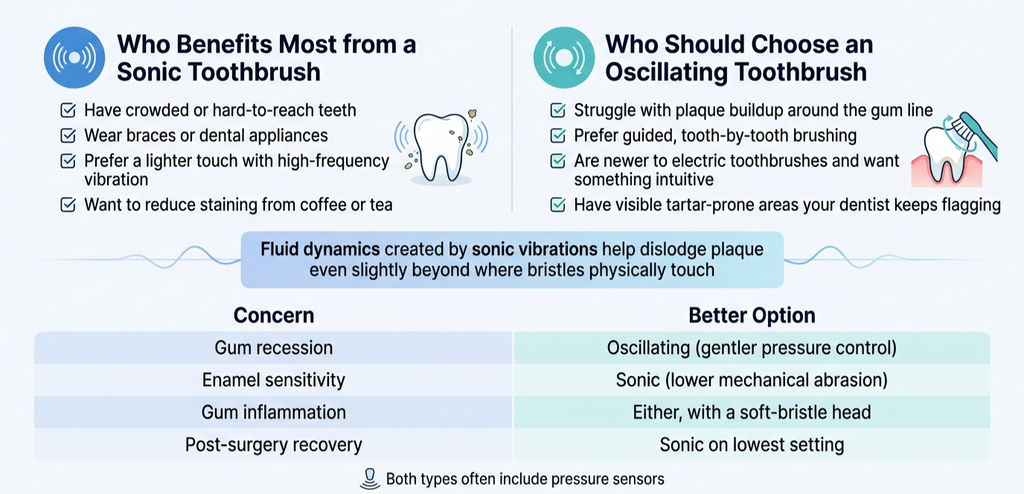
Who Benefits Most from a Sonic Toothbrush
Sonic toothbrushes are appropriate for persons that want a complete clean without putting too much pressure on their teeth. They’re suitable if you have:
- Have crowded or hard-to-reach teeth
- Wear braces or dental appliances
- Prefer a lighter touch with high-frequency vibration
- Want to reduce staining from coffee or tea
The fluid dynamics created by sonic vibrations help dislodge plaque even slightly beyond where bristles physically touch a real advantage for intricate areas.
Who Should Choose an Oscillating Toothbrush
Oscillating toothbrushes work best for people who want a more targeted, methodical clean. Consider one if you:
- Struggle with plaque buildup around the gum line
- Prefer guided, tooth-by-tooth brushing
- Are newer to electric toothbrushes and want something intuitive
- Have visible tartar-prone areas your dentist keeps flagging
Considerations for Sensitive Teeth and Gums
| Concern | Better Option |
| Gum recession | Oscillating (gentler pressure control) |
| Enamel sensitivity | Sonic (lower mechanical abrasion) |
| Gum inflammation | Either, with a soft-bristle head |
| Post-surgery recovery | Sonic on lowest setting |
Both types Sonic vs Oscillating Toothbrush often include pressure sensors always prioritize that feature if your teeth or gums are easily aggravated.
Evaluating Cost and Long-Term Value
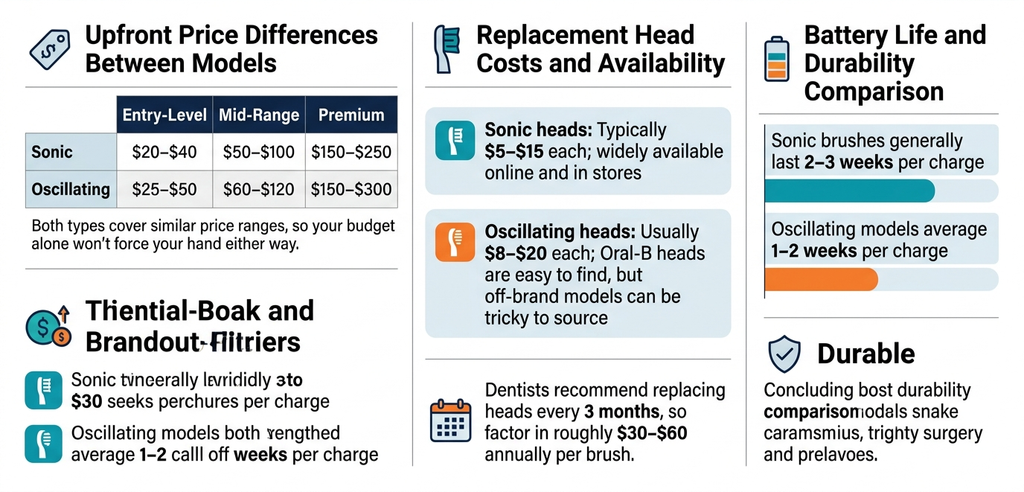
Upfront Price Differences Between Models
| Toothbrush Type | Entry-Level | Mid-Range | Premium |
| Sonic | 20–40 | 50–100 | 150–250 |
| Oscillating | 25–50 | 60–120 | 150–300 |
Both types cover similar price ranges, so your budget alone won’t force your hand either way.
Replacement Head Costs and Availability
- Sonic heads: Typically 5–15 each; widely available online and in stores
- Oscillating heads: Usually 8–20 each; Oral-B heads are easy to find, but off-brand models can be tricky to source
Dentists recommend replacing heads every 3 months, so factor in roughly 30–60 annually per brush.
Battery Life and Durability Comparison
- Sonic brushes generally last 2–3 weeks per charge
- Oscillating models average 1–2 weeks per charge
- Both types can last 5+ years with proper care
Getting the Most Value for Your Budget
The sweet spot for most people sits in the 60–100 range for either type. At that price, you get solid motor performance, pressure sensors, and multiple cleaning modes — without paying extra for features you’ll rarely use. Prioritize brands with readily available replacement heads to keep long-term costs manageable.
Choosing the Right Features for Your Lifestyle
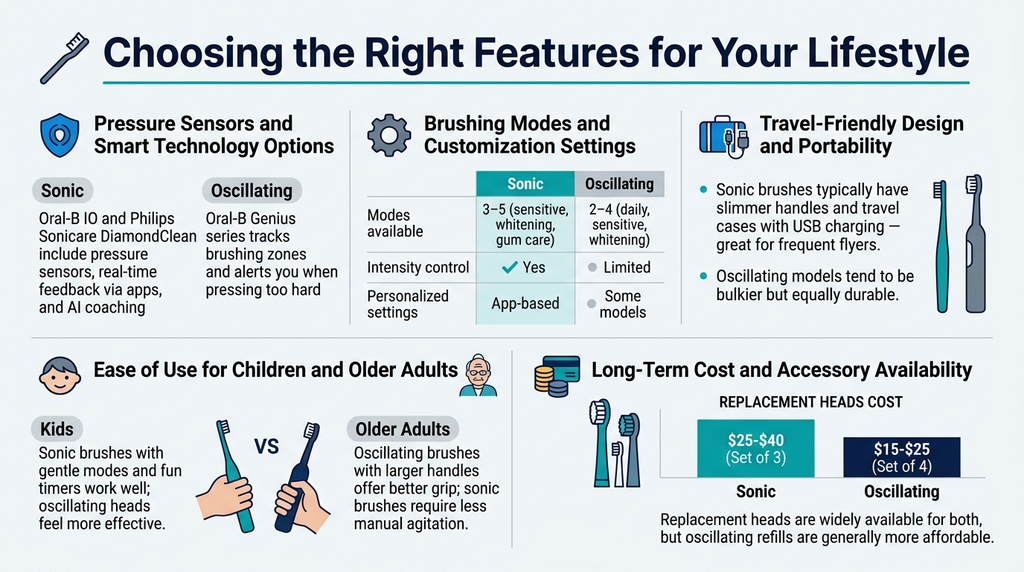
Pressure Sensors and Smart Technology Options
Both brush types now offer smart features worth considering:
- Sonic: Oral-B IO and Philips Sonicare Diamond Clean include pressure sensors, real-time feedback via apps, and AI coaching
- Oscillating: Oral-B Genius series tracks brushing zones and alerts you when pressing too hard
Brushing Modes and Customization Settings
| Feature | Sonic | Oscillating |
| Modes available | 3–5 (sensitive, whitening, gum care) | 2–4 (daily, sensitive, whitening) |
| Intensity control | Yes | Limited |
| Personalized settings | App-based | Some models |
Travel-Friendly Design and Portability
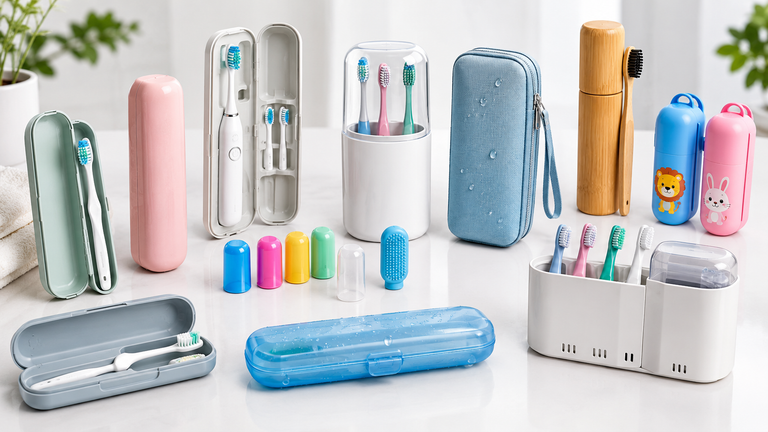
Sonic brushes typically have slimmer handles and travel cases with USB charging great for frequent flyers. Oscillating models tend to be bulkier but equally durable.
Ease of Use for Children and Older Adults
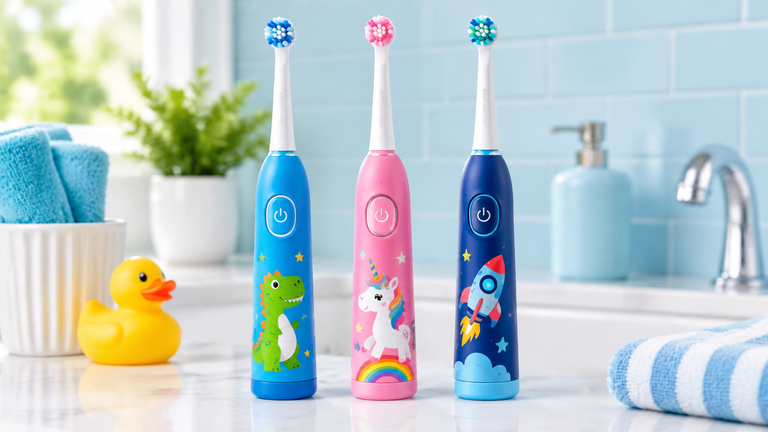
- Kids: Sonic brushes with gentle modes and fun timers work well; oscillating heads feel more familiar
- Older adults: Oscillating brushes with larger grips and fewer settings are easier to manage
Top Recommended Models in Each Category
- Best Sonic: Philips Sonicare ProtectiveClean 6100
- Best Oscillating: Oral-B Pro 1000
- Best Smart Option: Oral-B IO Series 9
Conclusion: Sonic vs Oscillating Toothbrush Which Is Better?
Choosing between a sonic vs oscillating toothbrush depends on your oral care needs, comfort, and personal preferences. Sonic toothbrushes use high-frequency vibrations to clean teeth, while oscillating-rotating toothbrushes use small, rotating brush heads to clean individual tooth surfaces.
Both types can be effective when used correctly and consistently. Rather than focusing only on brushing technology, look for useful features such as a pressure sensor, a two-minute timer, a comfortable brush head, and an affordable replacement-head supply.
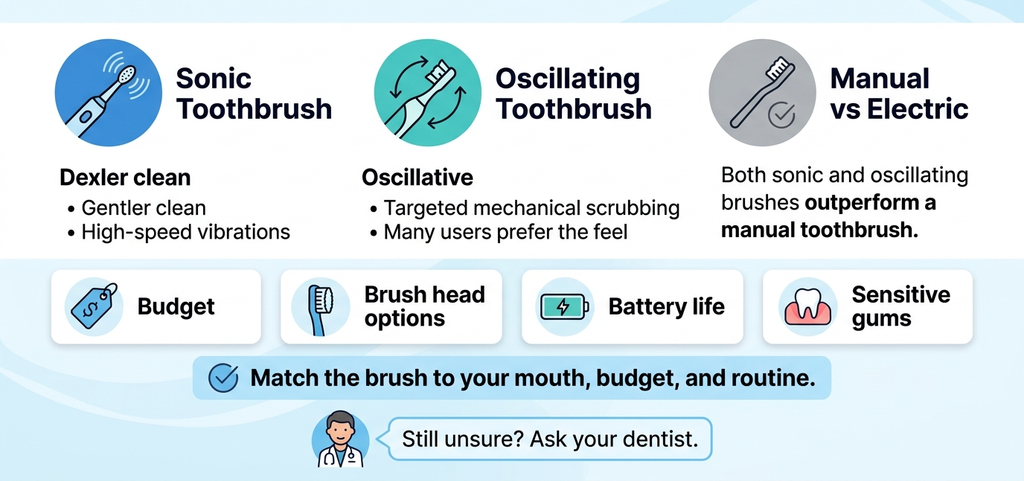
When deciding which to get, it’s important to think about the benefits you desire, the financial capabilities, the portability, and the sensitivity of your gums and teeth. With the right information and some consideration you’ll be able to select the best toothbrush for you. If you’re still on the fence after that, it’s best to consult with your dentist during your next visit to get more advice.