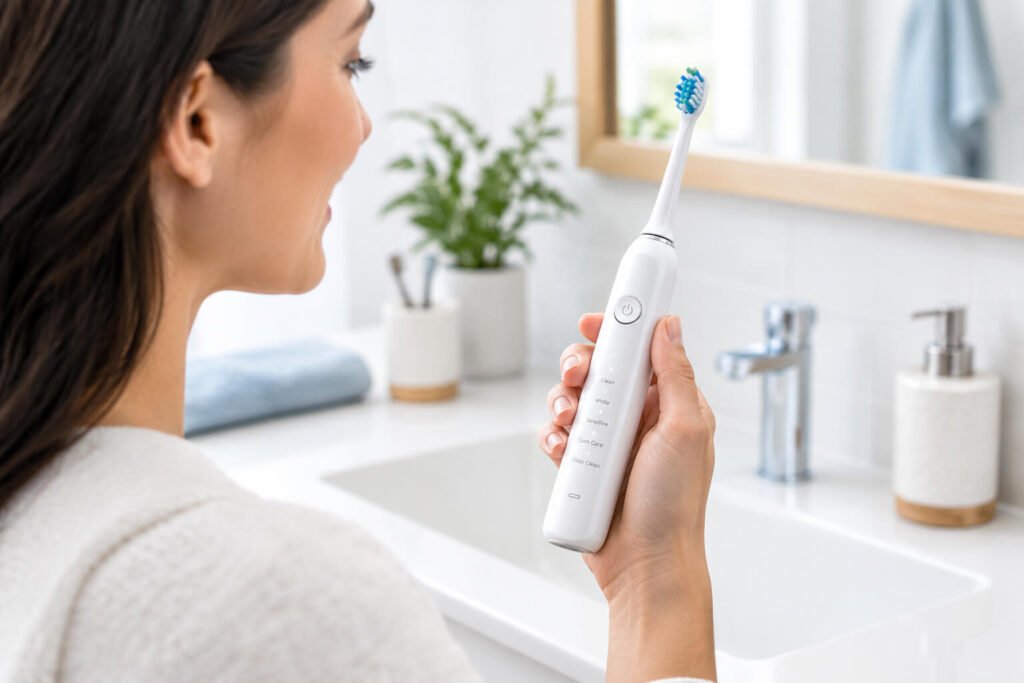
Learn how to choose an electric toothbrush by comparing brush types, features, battery life, pressure sensors, and prices to find the right one for your needs.
Picking the right electric toothbrush can make brushing your teeth much easier. However with so many options, models, brands and technologies it can feel overwhelming.
Understanding what to look for will help you make an informed decision on what is right for you whether you’re upgrading from a manual toothbrush, buying your first electric toothbrush or upgrading an old model.
We’ll show you how to pick the right electric toothbrush for your needs by looking at the different types of toothbrush, key features, battery life, brush head styles and price. We’ll also tell you what to look out for and avoid.
Types of Electric Toothbrushes
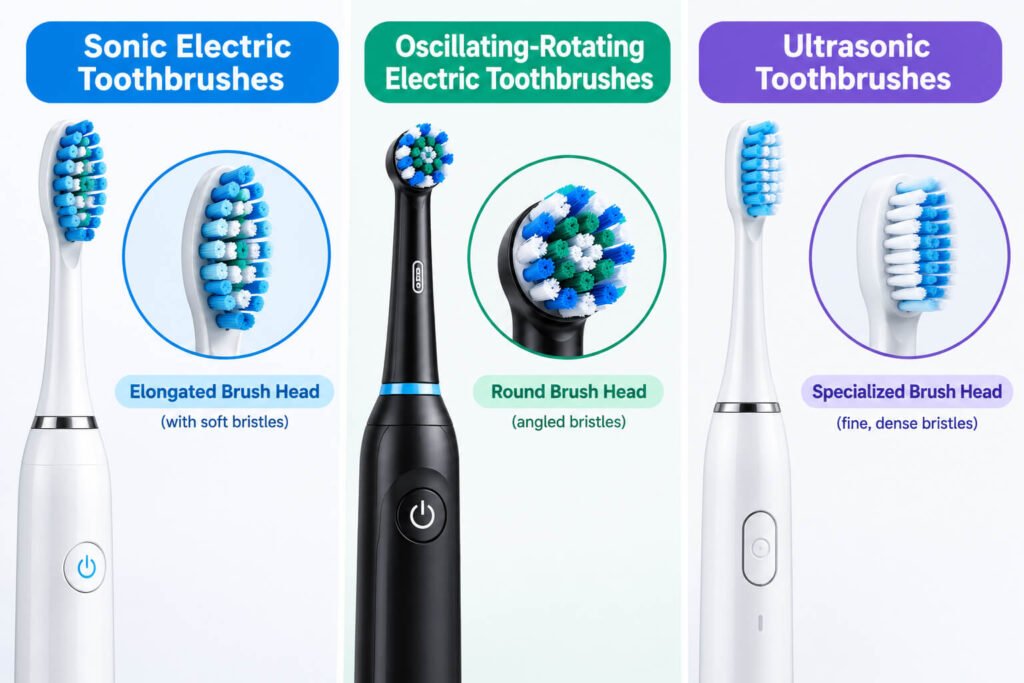
Before diving into individual brands, it’s important to understand the different types of electric toothbrushes. This is often a personal choice with different technologies offering different brushing movements.
- Sonic Electric Toothbrushes
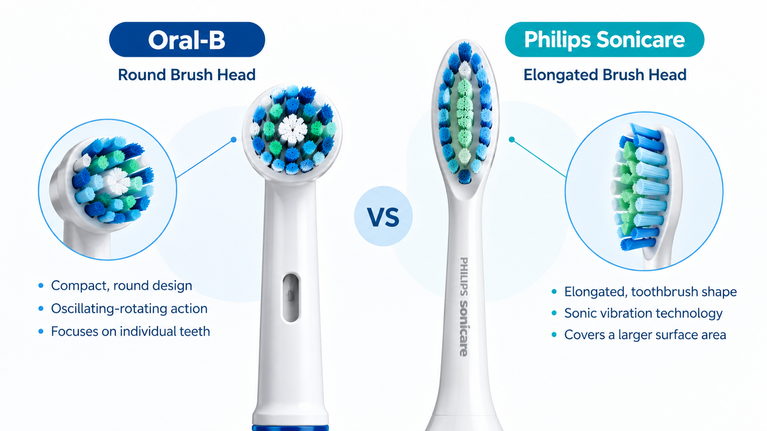
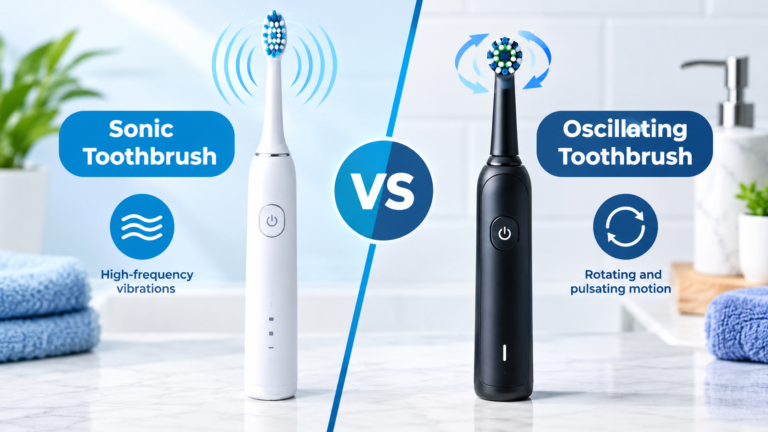
Sonic electric toothbrushes have high frequency vibrations that cause the brush head to move fast left to right. This helps clean your teeth and gum line effectively.
Many popular sonic toothbrushes have longer brush heads similar to manual toothbrushes.
Best for:
- Those who like the feel of a manual toothbrush
- Adults who want a rechargeable toothbrush
- Those who prefer a longer brush head
One of the most popular brands offering sonic toothbrushes is Philips Sonicare.
2. Oscillating Rotating Electric Toothbrush
These toothbrushes usually have a smaller round brush head that rotates in opposing directions. Some models also have pulsating action.
The smaller brush head makes it easier to clean individual teeth.
Best for:
- Those who prefer a smaller round brush head.
- Those who want to brush each individual tooth.
- Those who would like pressure sensors.
One of the most popular brands offering oscillating rotating toothbrushes is Oral-B.
3. Ultrasonic Toothbrush
Ultrasonic toothbrushes work by having very high frequency vibrations.
These are a more niche option. Check the technical information from the manufacturer to see if there is any independent evidence to back up their claims of effective cleaning.
Best for: Those who are specifically interested in this technology and have done their research.
Tip: Just because an electric toothbrush has a more complex brushing technology doesn’t mean it will clean better. A comfortable toothbrush that you brush your teeth correctly will be better than an expensive model with unnecessary features.
Look for Important Electric Toothbrush Features
Not all electric toothbrushes will have lots of features. However, some can make brushing your teeth easier.
The best features to look out for are:
Pressure Sensor
This will notify you if you’re brushing too hard. Depending on the model it could be a light, vibration, sound or automatic adjustment.
Great for those who tend to press hard.
A great feature to look out for if you can afford it is a pressure sensor.
Brushing Modes
Some electric toothbrushes have multiple brushing modes:
- Daily Clean: The standard brushing mode.
- Sensitive: A gentle mode.
- Whitening: A mode to polish teeth and remove surface stains.
- Gum Care: A gentle mode to help with your gum line.
- Deep Clean: A longer or more intense cleaning mode (on some models).
Whilst it can be tempting to have all of these modes, most adults will find a good daily cleaning mode and sensitive mode will be enough.
Built in 2-Minute Timer
Dentists usually recommend brushing your teeth for 2 minutes, twice a day.
Having a built in timer will help you brush for the right amount of time. Some toothbrushes will also have a 30-second timer to help you move onto a new section of your mouth.
Try to look for a 2-minute timer and quadrant timer rather than any fancy smart features.
Battery Life
This is an important feature to consider if you travel a lot or don’t want to charge your toothbrush too often.
Check:
- How long the battery lasts.
- If it has a charging base or charges via USB.
- How long it takes to fully charge.
- If the charging is convenient for your bathroom.
Check the manufacturer’s approximate battery life. This will depend on how you use your toothbrush and the settings.
Brush Head
The brush head can affect how comfortable the toothbrush is to use and how easy it is to reach all areas of your mouth.
Consider these points:
- Size: Smaller heads may be easier to maneuver around back teeth.
- Bristles: Soft bristles are generally recommended for everyday brushing.
- Shape: Round and elongated designs offer different brushing experiences.
- Replacement: Check how easily replacement heads can be purchased.
Check how much the replacement heads cost as this will add to the overall cost of your electric toothbrush.
Smart Features and Bluetooth
Some high-end toothbrushes have Bluetooth features to connect to a smartphone app.
Depending on the model this can help with brushing reports, reminders and notifications for areas you’ve missed.
Smart features can be useful if you like to track your habits but aren’t essential for effective daily brushing.
Best Electric Toothbrush for Your Needs
The best electric toothbrush will depend on your needs. Rather than going for the most expensive model, look for one that will help with your priorities.
Best Electric Toothbrush for Sensitive Teeth
If you suffer from sensitive teeth or gums, look for a toothbrush with a sensitive mode and a pressure sensor.
Look for:
- Soft replacement brush heads.
- Gentle brushing settings.
- Comfortable handle
- Easy control.
Avoid pressing hard and brushing aggressively. If you’re still suffering from sensitive teeth, it’s best to consult a dental professional to find out the cause.
Best Electric Toothbrush for Braces
If you have braces you need to be extra careful to clean around your brackets and wires.
Consider a toothbrush with:
- Small brush head..
- Soft bristles.
- Comfortable grip.
- Easy to replace brush heads.
An electric toothbrush can help with daily brushing but will not replace interdental brushes or any other tools recommended by your orthodontist.
Best Electric Toothbrush for Gum Health
If you want to focus on your gums look for a toothbrush with soft bristles and a pressure sensor.
A comfortable grip and easy to use brushing mode can help you brush regularly.
Remember your toothbrush is just one part of caring for your gums. Brushing properly, flossing and visiting your dentist regularly is still important.
Best Electric Toothbrush for Beginners
If you’re upgrading from a manual toothbrush, look for a simple model.
Useful features include:
- A two-minute timer.
- A 30-second pacer.
- Soft bristles.
- A comfortable handle.
- A simple charging system.
You do not need an expensive smart toothbrush to get started.
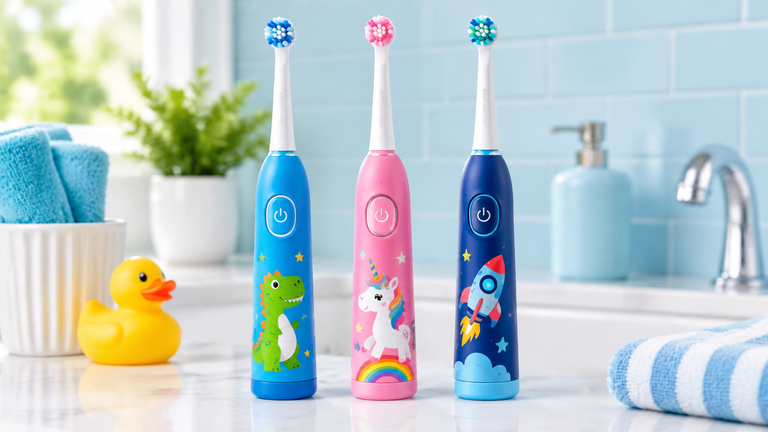
Best Electric Toothbrush for Children
Children need toothbrushes designed for their age and mouth size.
Look for:
- A smaller brush head.
- Extra-soft bristles.
- An easy-to-hold handle.
- Simple controls.
- Age-appropriate brushing guidance.
Parents should supervise brushing according to the child’s age and ability. Follow the manufacturer’s age recommendations before purchasing.
Rechargeable or Battery Operated?
Another thing to consider is whether you want a rechargeable or battery operated toothbrush.
| Feature | Rechargeable | Battery-powered |
| Power source | Built-in rechargeable battery | Replaceable batteries |
| Charging | Charging stand or cable | Battery replacement |
| Price | Often higher | Often lower |
| Travel | Depends on charger and battery life | Convenient if spare batteries are available |
| Features | Often more advanced | Usually simpler |
Rechargeable toothbrushes: are usually a good choice for daily use at home. They often have more features and can be more convenient in the long run.
Battery Operated toothbrushes: These are a good choice for those who want something simple and cheap. They won’t have a charging base.
Look at the initial cost and cost of replacing the brush heads, batteries and any other accessories.
How Much Should I Spend?
There are electric toothbrushes available at a variety of prices. Just because it’s more expensive doesn’t mean it will give you better results.et.
Budget models
Basic electric toothbrushes might have simple cleaning features and not many extra features. Great for beginners.
Mid-range models
Often have a good selection of features such as rechargeable batteries, timers, pressure sensors and multiple brushing modes.
Premium models
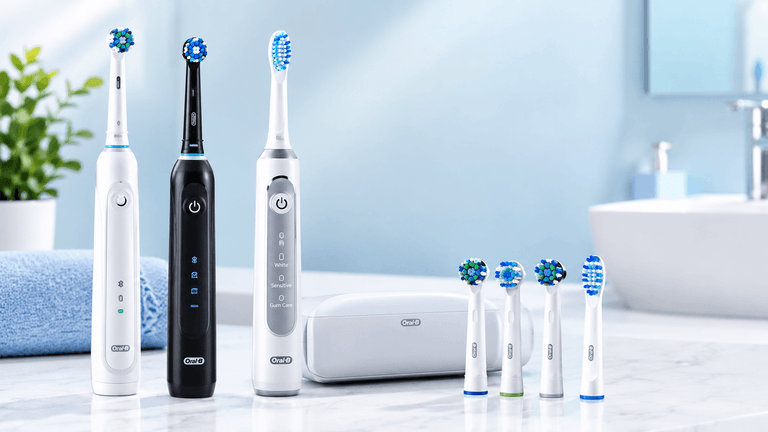
Premium toothbrushes might have smart features, extra brushing modes, advanced feedback, travel cases and upgraded charging features. If you really want these extra features then these are a good choice.
Top Tip: Look at the cost of replacing the brush heads. Sometimes you can get a cheap toothbrush but it might be expensive or hard to find brush heads to replace.
Best Electric Toothbrush Brands to Consider
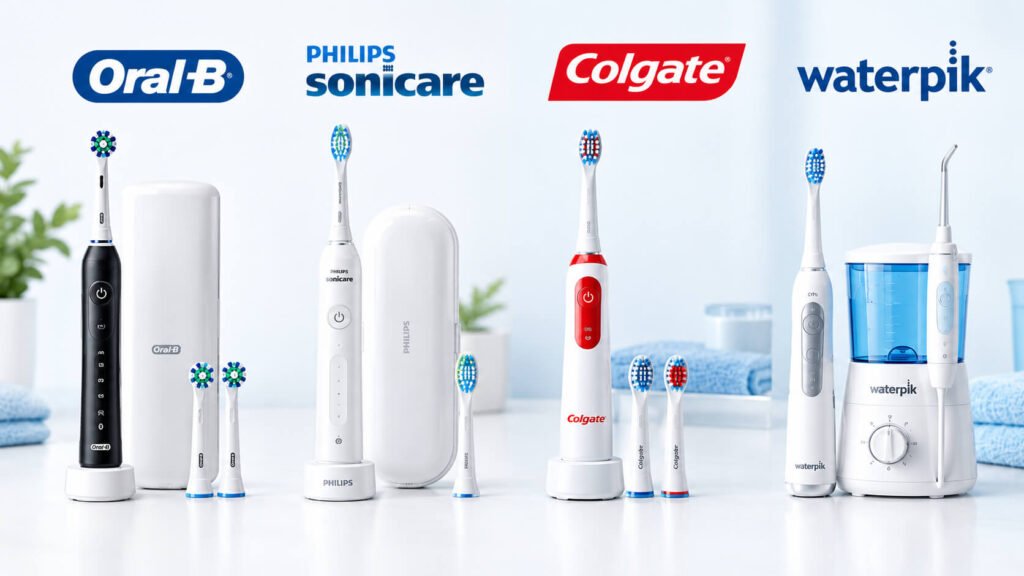
There are several well-known brands that offer electric toothbrushes.
Oral-B
Oral-B are well known for their oscillating rotating toothbrushes. They offer basic rechargeable models and high-end models with pressure sensors and smart features.
A good choice if you like round brush heads and brushing each individual tooth.
Philips Sonicare
Philips Sonicare are known for their sonic toothbrushes. They have long brush heads.
They have entry level and high-end models so are worth looking at if you like sonic toothbrushes.
Colgate
Colgate offers a range of oral care products including electric toothbrushes. Their electric toothbrushes might be a good choice if you want something simple.
Waterpik
Waterpik are well known for their water flossers however they do offer some toothbrushes. They might be worth looking at if you’re looking at different ways to look after your teeth daily.
Don’t choose a brand just because it’s well known. Look at the model, brush head availability, warranty, features and overall cost.
Things to Avoid
Knowing what to avoid will help you choose an electric toothbrush.
1. Don’t go for the most expensive model
High end toothbrushes can have some great features but you might be paying for features you won’t use.
2. Don’t forget to check the brush head cost
Brush heads can be an on-going cost. Check how much they cost.
3. Don’t go for one without a pressure sensor
If you tend to brush aggressively then a pressure sensor can be a great feature.
4. Don’t go for one with lots of brushing modes
More brushing modes don’t mean it will clean better. Go for a comfortable toothbrush with a timer and the right brushing intensity.
5. Don’t forget to check the battery
If you have to charge your toothbrush often it can become inconvenient. Check the battery specs.
6. Don’t forget to check brush head compatibility
Not all brush heads will fit all toothbrushes. Check if they are compatible.
How to Maintain Your Electric Toothbrush
Proper maintenance can help keep your toothbrush clean and working effectively.
Follow these simple tips:
- Rinse the brush head thoroughly.
- Allow the brush head to air-dry between uses.
- Store upright where possible.
- Don’t share brush heads.
- Replace the brush head every 3-4 months. Or sooner if the bristles become frayed.
- Follow the manufacturers guidelines for cleaning and charging.
- Keep the charging area clean and dry.
If you have been unwell or notice any damaged bristles, contact your dental professional or follow the manufacturers guidelines.
Frequently Asked Questions
Are electric toothbrushes better than manual?
Research shows that certain electric toothbrushes (particularly oscillating and rotating) can be better at reducing plaque and gingivitis than manual toothbrushes. However both can help you look after your teeth if used correctly.
What’s the best type of electric toothbrush for beginners?
A simple rechargeable electric toothbrush with soft bristles, 2 minute timer and comfortable handle.
Should I go for a Sonic or Oral-B?
Sonic and Oral-B (oscillating rotating) use different technologies. Both can be effective. Choose whichever is most comfortable for you, has the brush head you would like and fits within your budget.
How often should I replace my electric toothbrush head?
Most manufacturers and dental professionals would recommend replacing your brush head every 3-4 months. However if you can see the bristles have worn down you can replace them sooner.
Do I need a smart electric toothbrush?
No. Bluetooth and apps are optional. A toothbrush with the right brush head, timer and pressure sensor could be all you need.
How long should I brush my teeth for?
Try to brush your teeth for 2 minutes, twice a day. Unless your dental professional recommends otherwise. Split your mouth into 4 sections and spend around 30 seconds on each.
Final Buying Recommendations: Which Electric Toothbrush Should You Choose?
Now you know what to look for when buying an electric toothbrush you can make an informed decision.
Here is a simple recommendation based on different needs:
| Your needs | What to look for |
| Beginners | Simple rechargeable model with a timer |
| Sensitive teeth | Sensitive mode and pressure sensor |
| Braces | Compact head and soft bristles |
| Everyday cleaning | Comfortable brush with a two-minute timer |
| Frequent travelers | Long battery life and travel-friendly charging |
| Premium features | Smart feedback and multiple cleaning modes |
Ultimately the best electric toothbrush will be one that feels comfortable, suits your needs and fits within your budget.
You don’t need to buy the most expensive toothbrush to keep your brushing healthy. Look for essential features, affordable brush heads and brush regularly.
Ready to find the right toothbrush? Explore our Best Electric Toothbrushes guide to compare different models, features, and price ranges before making your decision.