Compare Oral-B vs Philips Sonicare electric toothbrushes, including cleaning technology, brush heads, gum care, battery life, replacement costs, and top models.
It can be hard to decide between Oral-B or Philips Sonicare electric toothbrushes since both companies make various devices to clean your teeth each day. However, they generally differ in the type of motion, head shape, brushing sensation, features offered, and price.
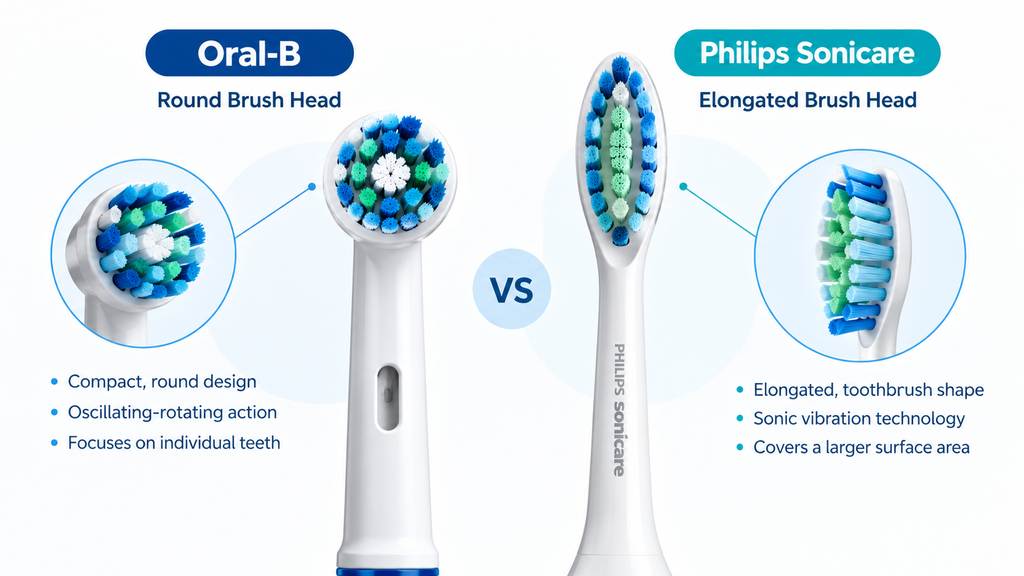
Oral-B tends to highlight toothbrushes with round brush heads that rotate, while Philips Sonicare uses larger, elongated brush heads that vibrate with sonic vibrations. The companies also offer a variety of functions such as pressure sensors, timers, brushing modes, and replacement heads. When considering Oral-B vs Philips Sonicare, it is important to identify what brushing experience and functions are best for your daily oral care.
Oral-B Overview
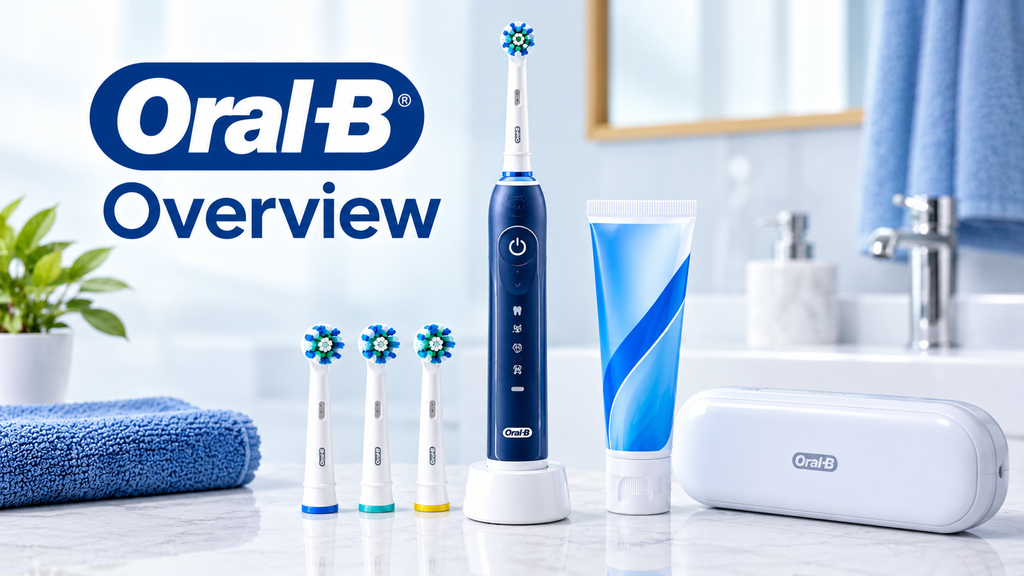
Oral-B is a company that makes traditional toothbrushes, replacement brush heads, and electric toothbrushes with more technologically-savvy options. Some electric variants are budget-friendly and simply rechargeable while others highlight connectivity and smart features.
Key features
- Brush head: Many Oral-B electric toothbrushes use compact, round brush heads that are ideal for brushing individual teeth.
- Oscillating-rotating action:Most brushes use an oscillating-rotating motion, while some add pulsations.
- Pressure sensors:Some Oral-B toothbrushes highlight a built-in pressure sensor to alert you if you are brushing too hard.
- Brushing timers: Two-minute timers and interval reminders help users distribute brushing time across their mouth.
- Multiple cleaning modes: Depending on the model, users may find modes for everyday cleaning, sensitive teeth, gum care, or whitening.
- Smart features: Some Oral-B electric toothbrushes have brushing guidance or coaching, or connect with an app to track your progress.
Benefits and limitations
The Oral-B vs Philips Sonicare compact and round head is ideal for gently scrubbing individual teeth or smaller areas of your mouth. Additionally, some Oral-B options highlight a rotating oscillating-rotating motion that gives a nice cleaning sensation.
However, the round head shape may be unusual for some who are used to traditional elongated brush heads. Additionally, some brushes may be louder and more vibrating than others, and smart features or battery life can vary.
Who it is good for: Oral-B is ideal for those who want a round toothbrush head, brushing guidance for sensitive gums or teeth, or various modes to switch between as needed.
Philips Sonicare Overview
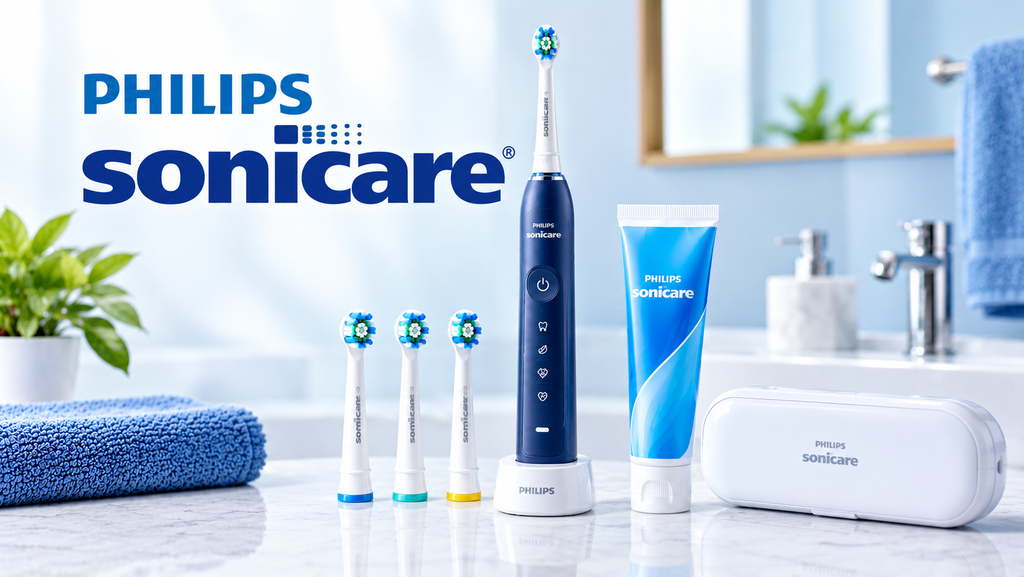
Philips Sonicare electric toothbrushes utilize sonic vibrations to exfoliate plaque and food buildup from your teeth with each brush stroke. They also have a variety of interchangeable brush heads for different cleaning needs and some even highlight smart features to guide your brushing each day.
Key features
- Brush head:Elongated brush heads meant to mimic a traditional manual toothbrush.
- Sonic vibrations: The brush uses rapid sonic vibrations to move the bristles back and forth, up and down, and in circular rotations.
- Pressure sensor: Some Philips Sonicare brushes have a built-in pressure sensor to alert you when you are brushing too hard.
- Smart timers: Most rechargeable electric toothbrushes highlight timers to keep you brushing for the recommended two minutes each session.
- Brushing modes:Depending on the Philips Sonicare model and brush head you choose, multiple modes are available to target different cleaning needs.
- Smart features:Some brushes offer additional guidance or coaching when connected to the Philips Sonicare app.
Benefits and limitations
Philips Sonicare toothbrushes highlight sonic vibrations and a longer, more traditional-looking brush head that may appeal to some who are used to manual brushing. The motion of most Philips Sonicare toothbrushes also mimics regular brushing, though some will notice a deeper cleaning sensation.
However, the vibrations may be strange for those who are not used to them and genuine replacement brush heads can be costly. There are also fewer guided features across the various models, and some may find the brush heads or vibrations uncomfortable. Additionally, the Philips Sonicare brand name may be associated with higher-end electric toothbrushes with fewer budget options.
Who it is good for: Philips Sonicare is ideal for those who want a more traditional manual toothbrush shape with sonic vibrations to loosen debris.
Oral-B vs Philips Sonicare: Key Differences
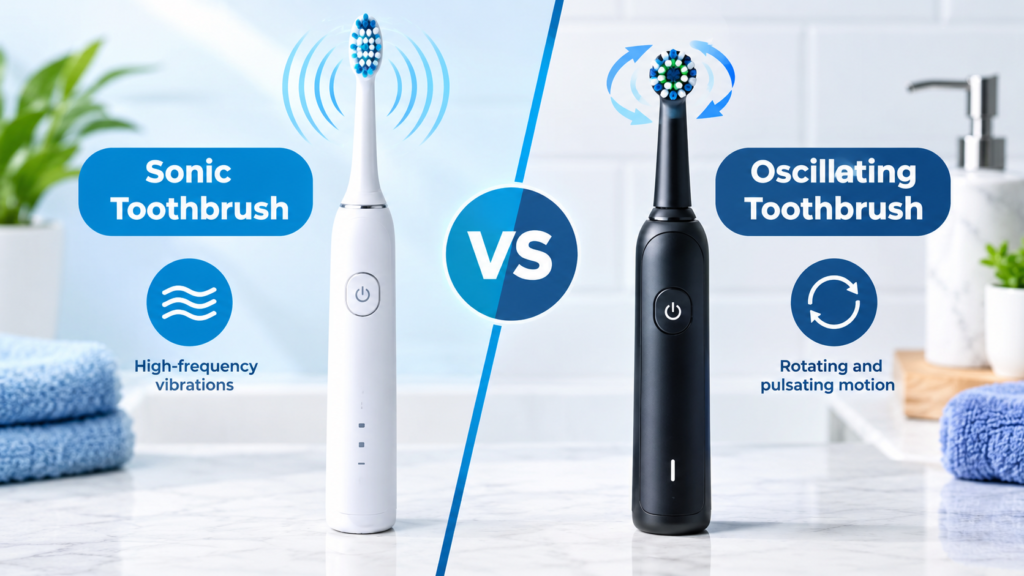
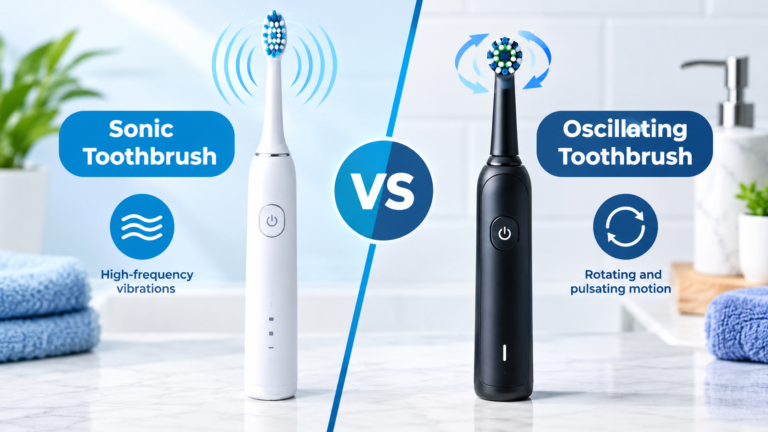
The biggest difference between Oral-B and Philips Sonicare toothbrushes is the motion and head shape. However, this does not necessarily mean one is superior for all users.
| Feature | Oral-B | Philips Sonicare |
| Cleaning technology | Oscillating-rotating action on many models | Sonic vibration technology |
| Brush head | Commonly round | Commonly elongated |
| Brushing sensation | More noticeable individual head movements on many models | Rapid sonic vibrations |
| Pressure feedback | Available on selected models | Available on selected models |
| Brushing modes | Varies by series | Varies by series |
| Smart guidance | Available on premium and selected midrange models | Available on selected premium models |
| Replacement heads | Different heads for different Oral-B systems | Compatible Sonicare heads vary by handle |
| Best reason to consider it | Round-head cleaning and guided brushing | Sonic brushing and an elongated head |
The table describes general product-family differences. Individual models may have features that are not available throughout the range.
Cleaning Technology and Plaque Removal
Traditional Oral-B electric toothbrushes tend to use an oscillating-rotating motion. The brush head rotates in alternating directions while some also incorporate pulsations.
The iO series combines the standard oscillating-rotating motions with additional micro-vibrations.
Philips Sonicare toothbrushes utilize sonic vibrations to move the bristles in rapid, sweeping motions. During the movement, the brush lifts slightly off the teeth and moves in a side-to-side motion as well as circular rotations.
The Philips Sonicare website also mentions fluid motion, which is generated by the rapid vibrations to loosen debris. Each technology can be effective for plaque removal, but research suggests that traditional oscillating-rotating brushes may have slight benefits.
A 2020 review noted that there was statistically significant evidence to suggest that oscillating-rotating brushes had better plaque and gingival bleeding reduction compared to other powered toothbrushes, including sonic variants.
However, Oral-B vs Philips Sonicare this does not indicate that all Oral-B toothbrushes are superior to all Philips Sonicare variants. The individual model, as well as proper brushing technique, will still influence the outcome.
Technique, time spent brushing, pressure applied, and frequency are all important factors. Additionally, a properly used budget electric toothbrush can be more effective than an expensive smart electric toothbrush.
Brush Head Design and Comfort
The difference in brush head shape is perhaps the most noticeable difference between the two companies. While Oral-B toothbrushes tend to use smaller, round brush heads, Philips Sonicare utilizes longer, more traditional-shaped brush heads.
Oral-B: The round brush head is compact and designed to gently scrub each individual tooth or smaller area of the mouth at a time.
Philips Sonicare: The elongated brush head is meant to mimic a manual toothbrush and clean a larger area with each sweep.
Neither is inherently more comfortable than the other, and some individuals may find one more suitable than the other based on their needs and mouth size. Those with small mouths or sensitive gums should also consider a soft bristle brush head, as well as the size and shape of the brush head itself.
Additionally, individuals with braces or limited dexterity should consider what head size and motion is most comfortable for them.
Gum Health and Sensitive Teeth
Both Oral-B and Philips Sonicare offer pressure sensors, gentle brushing modes, and other features to help those with sensitive gums and teeth. However, it is important to note that each brand has different modes and options. For example, Oral-B’s Sensitive mode is specifically designed for sensitive gums while Philips Sonicare has a Gum Care mode.
For sensitive gums or teeth, look for a sensitive cleaning mode, a soft bristle brush head, and a built-in pressure sensor. Additionally, remember to apply gentle pressure and let the brush do most of the work instead of scrubbing. It is also good to keep in mind that a more expensive electric toothbrush will not diagnose or treat sensitive gums, plaque buildup, or other issues. If you experience recurring gum sensitivity or bleeding, it is best to speak with a dentist.
Battery Life and Charging
Battery life will vary depending on the individual model, so it should not be assumed that all Philips Sonicare brushes will last longer than all Oral-B toothbrushes.
Philips Sonicare: Some entry-level toothbrushes have a battery life of up to 14 days while other higher-end variants have a shorter battery life.
Oral-B: Battery life and charging time vary depending on the series and model of the electric toothbrush.
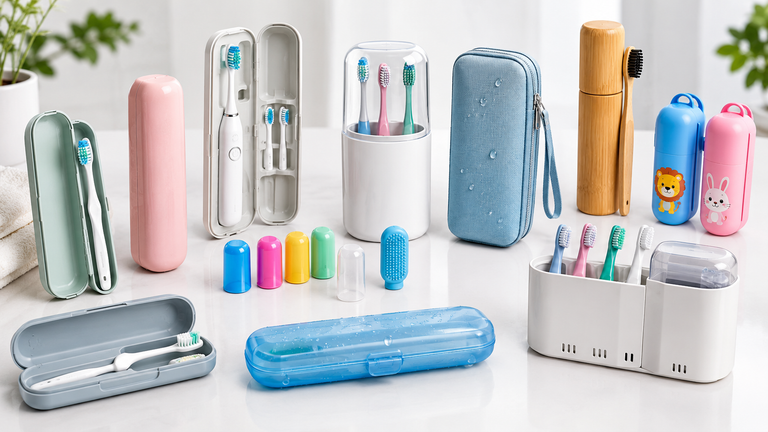
Both companies also make various other accessories such as travel cases, stand chargers, and magnetic chargers that can be purchased separately.
If you travel frequently, it is a good idea to identify how long the battery on your preferred model will last and how long it takes to recharge. It may also be necessary to identify if a magnetic charger or travel case is included with the toothbrush or sold separately. Alternatively, you may also want to invest in a high-quality stand charger instead.
Replacement Brush Heads and Long-Term Costs
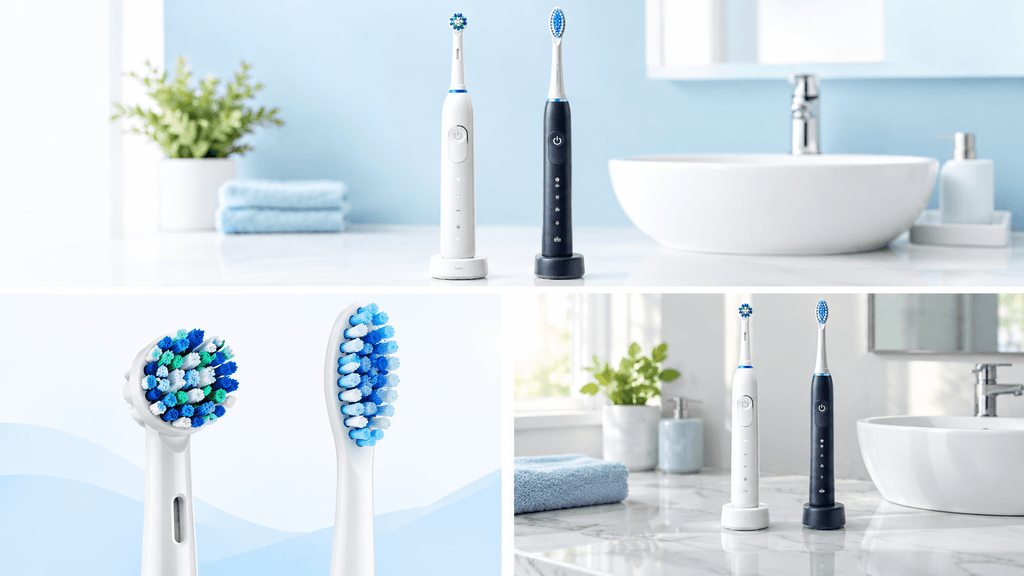
The Oral-B vs Philips Sonicare initial cost of the electric toothbrush is only part of the investment. Replacement brush heads should also be taken into consideration, as they are generally not included with most electric toothbrushes.
Oral-B: There are various different replacement brush heads that vary in function and price. This includes the iO replacement heads that are only compatible with iO Oral-B electric toothbrushes and cannot be used with any other Oral-B variant.
Philips Sonicare: Similar to Oral-B, there are various different brush heads that vary in function and price. It is also vital to ensure that the replacement head is compatible with your Philips Sonicare model.
Both companies will recommend replacing the brush head every three months. However, it is important to inspect the bristles and follow the specific instructions for your electric toothbrush.
To determine the cost, calculate how much you would spend on the electric toothbrush plus approximately four sets of replacement brush heads each year.
It may be more cost-effective to purchase a cheaper electric toothbrush with more affordable replacement brush heads that are widely available in your area rather than a higher-end model.
Best Models From Each Brand
These are examples of electric toothbrushes to consider for your individual needs rather than a ranking of the best overall variants since availability may vary by location.
- Oral-B Pro series:A good option if you are looking for a simple electric toothbrush with a round brush head and basic cleaning modes..
- Oral-B iO series: Ideal if you want a toothbrush with more pressure feedback, brushing guidance, and additional cleaning modes.
- Philips Sonicare 3100 series: A potential starting point for people who want sonic cleaning, a timer, and pressure feedback on compatible models.
- Philips Sonicare ProtectiveClean series: A budget-friendly choice if you want sonic vibrations and a built-in timer on a more affordable electric toothbrush.
- Philips Sonicare DiamondClean series: A higher-end option if you want an electric toothbrush with more cleaning modes and additional intensity levels.
Before purchasing, ensure you research the exact model number, features, accessories, warranty, and replacement brush head cost on the company’s official website.
Pros and Cons of Oral-B and Philips Sonicare
Oral-B
Pros
- Round brush heads support tooth-by-tooth brushing.
- Offers basic and feature-rich models.
- Selected models include detailed pressure feedback and smart coaching.
- Multiple replacement-head styles are available across its product range.
Cons
- The round-head brushing sensation may not suit everyone.
- Some models produce noticeable noise or vibration.
- iO replacement heads are not interchangeable with standard Oral-B heads.
- Premium features can increase the purchase price.
Philips Sonicare
Pros
- Elongated brush heads may feel familiar to manual-toothbrush users.
- Sonic cleaning provides a different brushing experience.
- Selected models include pressure sensors, timers, and multiple cleaning modes.
- Offers entry-level and premium options.
Cons
- Sonic vibrations may take time to get used to.
- Features and battery performance vary across models.
- Genuine replacement heads can add to long-term costs.
- Advanced coaching and display features are not available on every model.
Which One May Suit You?
It is more important to identify which option appeals to you rather than attempting to identify the best electric toothbrush overall.
- Consider Oral-B if you prefer a compact round head, want to focus on individual teeth, or Consider Oral-B if: You prefer a compact, round brush head that gently scrubs individual teeth, a larger range of electric toothbrushes to choose from including those with smart features, or comprehensive pressure feedback for sensitive gums or teeth.
- Consider Philips Sonicare if: You want a more traditional-shaped brush head, prefer a toothbrush with sonic vibrations, or are looking for a brush head that mimics a manual toothbrush.
- For sensitive gums: Compare the pressure sensors, brush head recommendations for sensitive gums, and brushing guidance features of the individual models you are considering.
- For a budget: Compare the overall cost rather than the initial cost of the electric toothbrush. Determine the cost of the electric toothbrush plus approximately four sets of replacement brush heads each year.
- For frequent travel: Prioritize battery life, as well as charging options and included accessories such as a travel case.
For those who can: Consider testing out both types of brushing sensations and motions to identify which is more comfortable and suitable for your needs on a daily basis.
Frequently Asked Questions
1. Is Oral-B better than Philips Sonicare?
Neither brand is better overall since research indicates that traditional oscillating-rotating toothbrushes may have benefits for plaque and gum reduction. However, individual models and brushing techniques will influence the outcome.
2. Which is better for sensitive gums?
Either brand can be suitable, depending on the model and brushing techniques. Choose a toothbrush with a sensitive mode and soft bristle brush head, and look for pressure sensors to alert you if you are brushing too hard.
3. Do Oral-B and Philips Sonicare use the same replacement heads?
No, the replacement brush heads are not interchangeable. Additionally, iO replacement brush heads cannot be used with other Oral-B electric toothbrushes.
4. How often should I replace an electric toothbrush head?
A common recommendation is every three months or when the bristles begin to fray. Always follow the instructions for the specific electric toothbrush you own.
5. Are premium electric toothbrushes worth the extra money?
It depends on your needs since most higher-end electric toothbrushes tend to offer more guided brushing, pressure feedback, and additional modes or features. However, a budget electric toothbrush may still offer a reliable brushing experience without the extra cost.
Conclusion
The fundamental difference between Oral-B and Philips Sonicare is evident in the working principles of the devices: the former brand uses round-shaped oscillating-rotating brush heads, and the latter uses elongated brush heads with sonic vibrations.
The two companies offer a wide variety of electric toothbrushes developed to address different concerns, such as everyday cleaning, sensitive gums, and additional features for a more comprehensive oral care experience.
However, their variance in terms of comfort, battery performance, features, head replacement system, and cost should be considered before purchasing. Instead of focusing on the brand name, pay close attention to your needs and preferences, the level of care, and your budget, as well as the availability of replacement heads for your preferred device. In the end, the most comfortable and high-quality option will keep you motivated in your dental care routine.