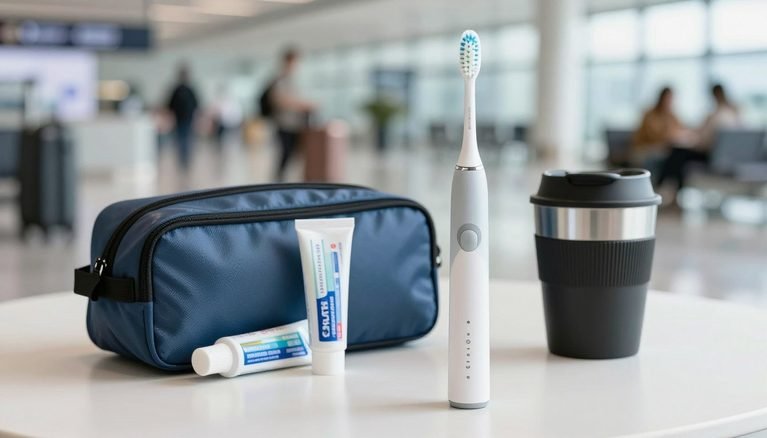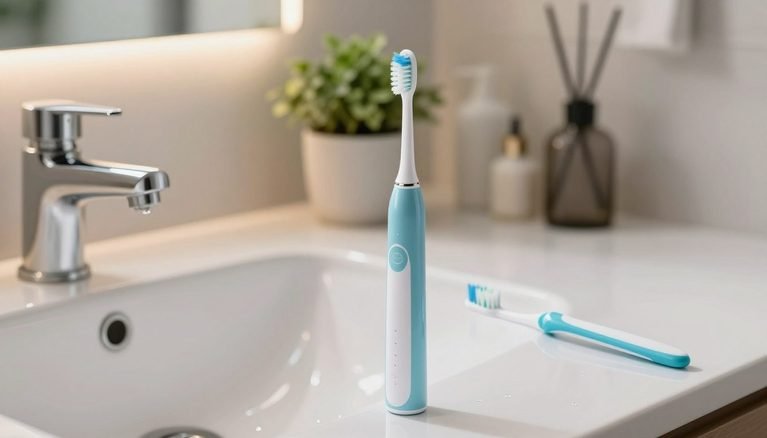
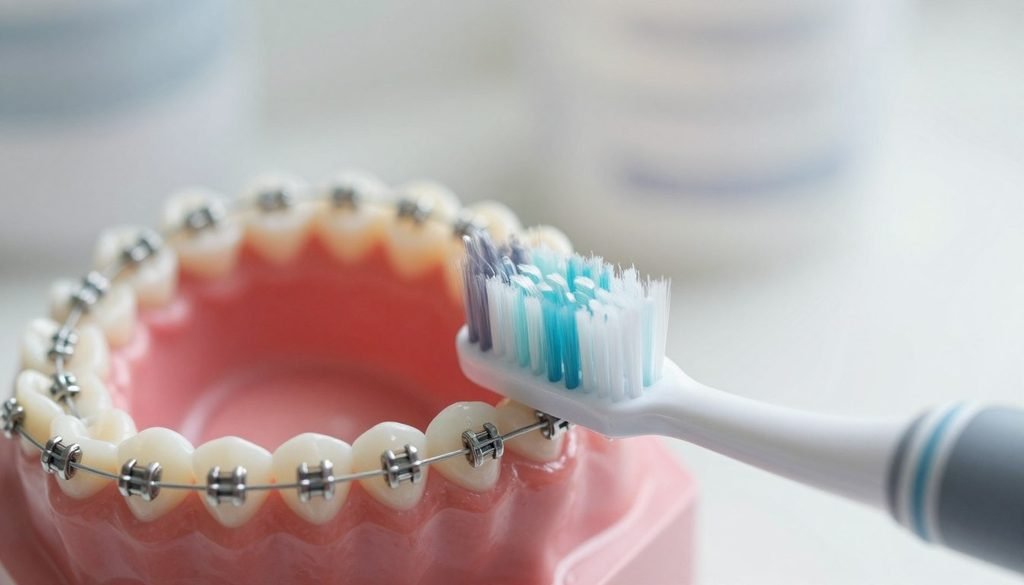
Find the best electric toothbrush for braces. Compare 7 top picks, features, soft brush heads, and expert tips for cleaning around brackets and wires.
The Oral-B iO Series is the best option for most people with braces. However, if you prefer a sonic toothbrush, Philips Sonicare is a great option. Due to the brackets and wires of the brace, it is important to carefully clean around the edges.
Brush your teeth twice a day for 2 minutes using a soft brush and fluoride toothpaste. Having a comfortable handle and brush head is more important than additional features. This will help you decide which one of the 7 options is best for you.
Key Takeaways
- Best for most with braces Oral-B iO Series
- Sonic option Philips Sonicare
- Choose a comfortable handle and a soft head you can guide.
- Brush gently around the brackets and wires
- Make sure the handle is compatible with your brush heads
Whilst braces will alter the shape of what you need to clean, you don’t need to complicate things. A brush that you can control is more important than one with lots of features..
Best Electric Toothbrush For Braces – Features
Look out for a soft brush with a head that can be easily manoeuvred around each bracket. Controllability is key here. If the head doesn’t feel comfortable whilst cleaning around your braces, you may struggle to reach smaller areas.
Having a comfortable toothbrush is more important than having lots of features. Ensure the handle feels comfortable in your hand.
Soft bristles and small head
Soft bristles will allow you to gently clean around the brackets. A small head can help you reach the back of your teeth.
However, ensure the head isn’t too large as it can cause issues with your cheeks close to your back molars.
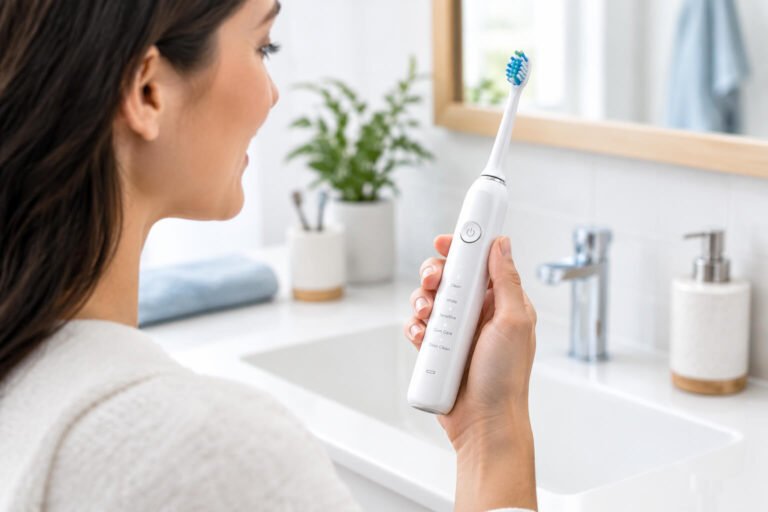
Hold the brush like you would at the sink, ensuring it feels comfortable in your hand. The head should be easy to move.
Timer, pressure sensor and ADA Seal
A timer will help you brush your teeth for the full 2 minutes. A pressure sensor will notify you if you’re brushing too hard.
The ADA seal of acceptance means the brush has been assessed to ensure it is safe and effective at removing plaque and reducing gingivitis. This is useful to know.
Use this short checklist when comparing toothbrush braces options:
- Soft bristles for gentle cleaning
- A compact head you can steer
- A comfortable, secure grip
- A timer that tracks brushing time
- A pressure sensor that warns against hard scrubbing
Brand names and feature counts cannot tell you how a head will feel against your cheeks or teeth. If you can test the grip in person, check that your fingers can hold it without squeezing.
Before buying, check that you can reach the back molars without the head catching on your cheeks.
Electric or Manual With Braces
Both manual and electric toothbrushes can effectively clean your teeth with braces. However, an electric may be easier to use around your appliances. As long as you use them well, both can be effective.
An oscillating rotating brush was found to be the most effective for reducing plaque (2026). The SUCRA value indicates how well a treatment ranked compared to others in the network meta-analysis.
What the research says about brushing types
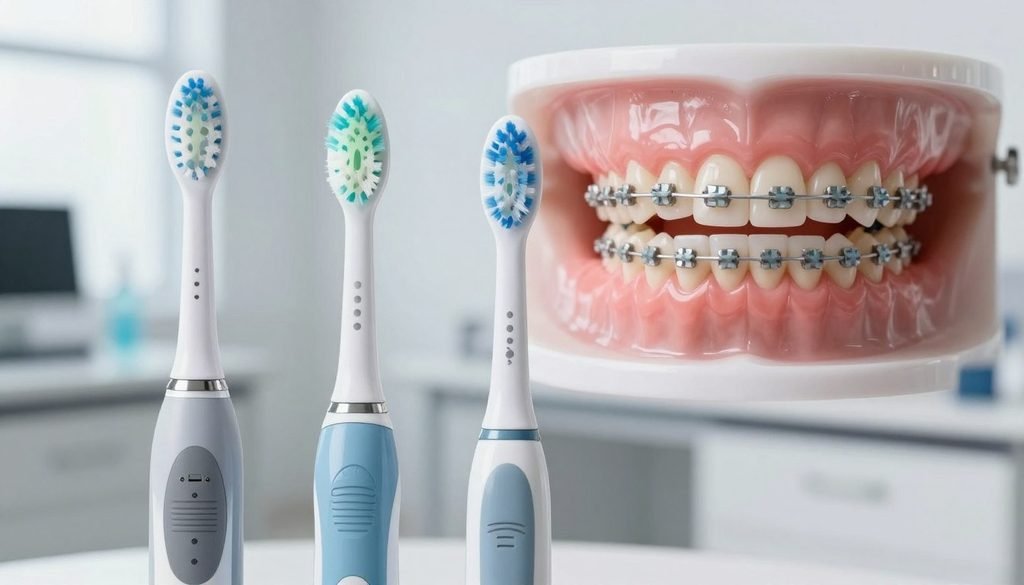
The analysis covered 19 randomized controlled trials. It gave oscillating-rotating brushes a SUCRA value of 89.2%, sonic brushes 72.4%, ultrasonic brushes 54.1%, other electric brushes 45.3%, and manual brushes 18.3%.
These values show relative positions in the analysis, not how much plaque a brush removes in your mouth. The analysis found a similar ranking for gingivitis reduction, with greater benefits in subgroups of orthodontic patients and children.
| Type | Plaque-ranking result | Practical fit |
| Oscillating-rotating | 89.2% SUCRA value | Round head moves around brackets |
| Sonic | 72.4% SUCRA value | May suit you if you prefer sonic brushing |
| Manual | 18.3% SUCRA value | Direct control without a powered handle |
Which type fits your habits
ADA states that either manual or electric toothbrushes can be used effectively. An electric toothbrush may be easier to use if you have dental appliances like braces.
If you prefer direct control and don’t need an electric handle, this could be a good option. You can also brush your teeth at your own pace as long as you carefully clean all surfaces.
Don’t get too caught up in the rankings. The most important factors will be how comfortable and controllable the brush is, and how regularly you will use it.
When choosing an electric toothbrush, focus on what type of movement you prefer and how easy the brush is to manoeuvre around your braces. The findings from the research will help you decide.
Best 4 Electric Toothbrushes To Start With
The Oral-B iO Series has a rotating round head with a sensor and timer. This is the best option for most people with braces due to the features.
Philips Sonicare Protective Clean 6100 is the sonic option.
Oral-B Pro 1000 is a simple round head option.
This has an oscillating rotating round head with a sensor and timer.
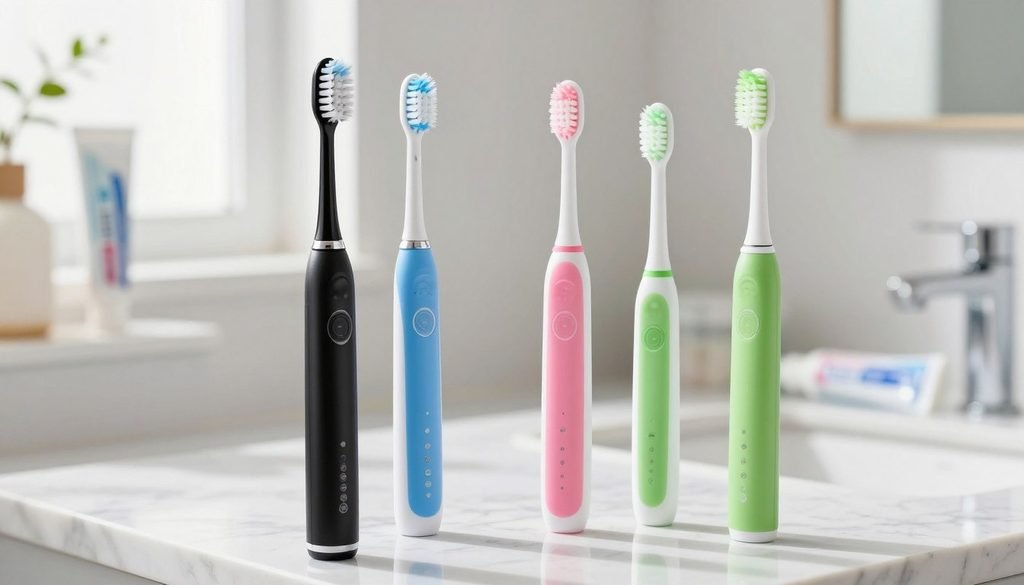
The iO Series has an oscillating-rotating round head, plus a sensor and timer. That gives you a way to check brushing time and notice excess pressure while cleaning.
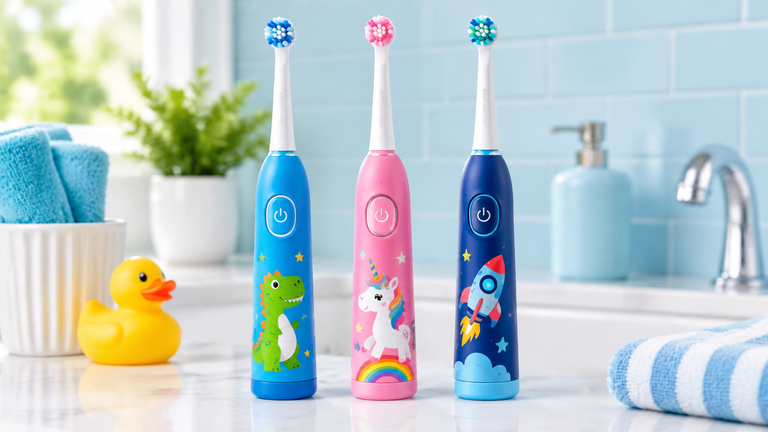
Philips Sonicare for Kids This provides a powered option for children. If your child struggles to reach all surfaces of their teeth, ensure the handle and brushing routine is suitable for their abilities.
All 4 brushes have different movements, head shapes and target users. The handle won’t be indicated on the product labels.
3 More Electric Brush Options
If none of the main 4 options provide the feel you want, these 3 options increase your options. How comfortable and easy to manoeuvre the head is may be more important to you.
Oral-B Kids Electric Toothbrush has a small round head. This may be more comfortable for a child to use. However, ensure they have a good grip and steady assistance.
Oral-B Genius 8000 has a round head. This could be a good option if you like a round head. However, you won’t know how this will feel next to your braces.
Philips Sonicare DiamondClean has a sonic head. This could be a good option if you like the feeling of a sonic brush.
Consider how the handle feels in your hand and how the head sits against your teeth. If you have braces you may find the same brush comfortable in one area but uncomfortable around the back.
Brush Heads Compatible With Your Handle
Before purchasing new heads ensure the handle is part of the correct family. Philips Sonicare and Oral-B have different rules. Ensure you pick the correct brand family.
Philips Sonicare brush heads are compatible with Philips Sonicare electric toothbrush handles. Oral-B iO handles are only compatible with iO brush heads. Oral-B Pro family handles are compatible with a few other Oral-B handles.
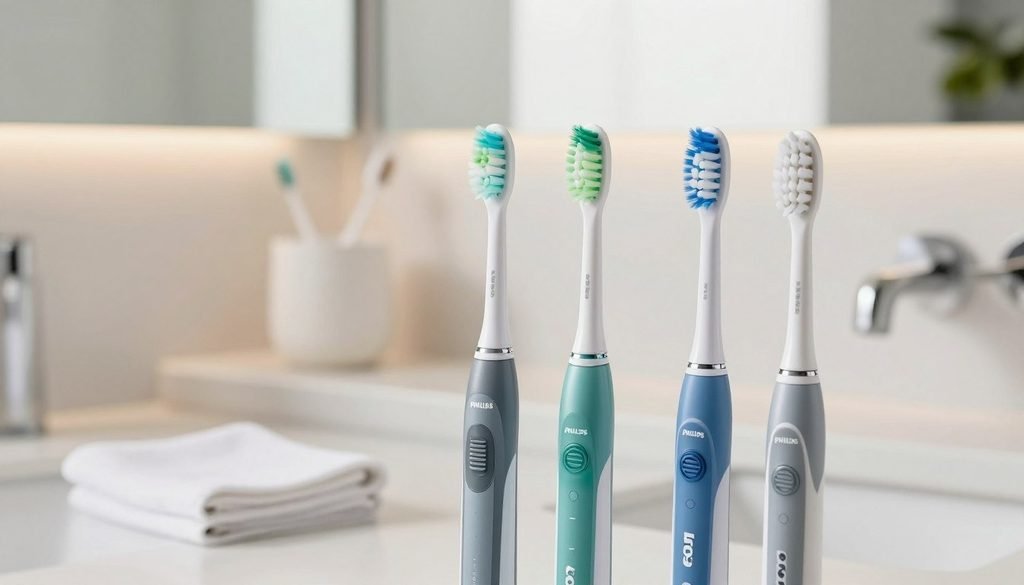
Sonicare Compatibility and Sensitive-Teeth Options
Philips Sonicare brush heads are compatible with all Philips Sonicare electric toothbrush handles. They claim to have up to 62,000 bristle movements with a fluid action to push fluids between your teeth and along your gumline.
The brush heads won’t necessarily have the same movement and fluid action. Don’t assume they will.
The Philips S2 Sensitive brush head has ultra-soft bristles to be gentle on sensitive teeth and gums. This could be a good option if you find harder bristles uncomfortable.
Oral-B Compatibility and Soft-Bristle Options
Oral-B iO handles are only compatible with Oral-B iO brush heads. Oral-B Genius, Smart, Vitality and Pro handles are compatible with Oral-B Pro brush heads. Ensure you know what handle you have.
Oral-B iO Gentle Care has extra-soft bristles to be gentle on sensitive teeth and gums.
Ensure you know what model name your handle has. Even if they appear similar, they may not be from the same family.
Ensure you pick a brush head from the same family and how soft you want the bristles to be against your gums.
How To Clean Around Brackets With An Electric Toothbrush
Brush one tooth at a time. Focus on cleaning the edges of the brackets. Ensure you have a steady movement to thoroughly clean around your gums, brackets and other surfaces.
Brush gently at a 45 degree angle. Spend around 30 seconds on each quadrant
Guide the brush over each tooth
Use this sequence to keep the tooth surfaces in order:
- Angle the head toward the gumline.
- Guide it over the outer surfaces above and below brackets.
- Brush the inside and chewing surfaces
- Brush each tooth in each quadrant.
Use small movements to manoeuvre the brush around the edges of the brackets. Ensure the head is touching the tooth and move onto the next.
This ensures you’re cleaning the front, back and chewing surfaces. It also makes it easy to see if you’ve missed any teeth at the back.
Tools To Help You Clean Between Your Teeth
Even a well-used electric brush cannot clean fully between teeth or under every part of an archwire. Between-teeth tools reach spaces that a toothbrush cannot clean completely.
Use a tool made for the gaps and wire areas your brush misses. Flossing once a day is a practical routine for cleaning between teeth.
Tools for the spaces a brush misses
These options reach different parts of braces and tooth gaps:
- Floss threaders help you floss underneath your orthodontic wires.
- Water flossers direct a jet of water around your appliances
- Interdental brushes help you clean between your brackets and wires
Pick one that will help you clean the hard to reach areas. Your orthodontic team can show you how to use them to avoid catching on your wire.
Build a routine around meals
Food can get caught around your brackets after eating. Creating a routine will help you spot and clean any food.
A powered brush won’t help you clean between your teeth. The brush head will clean the surfaces of your teeth. However, flossing, a water flosser or interdental brush will help you clean around your wires.
Ensure you keep your chosen tool somewhere you’ll use it. Keeping it in a visible place will help you remember to use it each day.
Pick a between teeth tool you can use regularly. If you’re unsure how to use it, ask your orthodontic team.
When To Replace Your Toothbrush/Brush Heads
Replace your toothbrush every 3-4 months. If the bristles look clearly matted or frayed, replace sooner.
The ADA recommends replacing your toothbrush every 3-4 months. Philips and Oral-B recommend replacing your brush heads every 3 months. This can help remind you when to replace them.
If your toothbrush has matted or frayed bristles, replace sooner.
Philips recommends replacing your Sonicare brush heads every 3 months. BrushSync will keep track of how often you’re brushing and will remind you to replace.
Oral-B recommends replacing your toothbrush heads every 3 months. Oral-B iO Ultimate Clean and Gentle Care have indicator bristles which will fade from blue to white.
If you share a bathroom, keep track of which brush is yours. This will help you know how long you’ve had your brush.
Conclusion
To make this as simple as possible, start with the Oral-B iO Series. If you prefer a sonic brush, Philips Sonicare could be a good option. This will give you a clear starting point to find a comfortable and suitable brush.
Pick a soft brush head that feels comfortable. Gently manoeuvre the brush around your braces. This will help your gums and remove plaque whilst wearing your braces.
Ensure you know exactly what family your handle is.
FAQ
How Often Should I Brush With Braces?
Brush your teeth twice a day using a soft brush and fluoride toothpaste. This follows the general guidelines from the ADA. This will give you time to clean around your brackets. Be careful to clean all surfaces of your teeth as food can get caught around the wires and edges of your brackets. A timer can help you brush for the full amount of time.
Will An Electric Toothbrush Loosen My Brackets?
As long as you’re using a soft electric brush gently, it shouldn’t loosen your brackets. Avoid scrubbing too hard and ensure the brush head is gently moving around each tooth. If you feel your brackets are becoming loose, stop brushing this area and contact your orthodontic team.
Do I Need A Special Orthodontic Brush Head?
No, you can effectively clean your braces using a soft standard brush head. Whilst a specialised brush head could help you reach areas around your brackets, it isn’t necessary for everyone. Ensure you pick a brush head that is compatible with your handle and easy to manoeuvre. If you’re struggling to clean a certain area, your orthodontic team can help.
Will Philips Sonicare Brush Heads Work With An Oral-B Handle?
No, Philips Sonicare brush heads won’t work with an Oral-B handle. Philips Sonicare brush heads will only work with Philips Sonicare handles. Oral-B iO handles will only work with Oral-B iO brush heads. Other Oral-B handles will use their own Pro family. Ensure you know what model name your handle is. Just because the head shape is similar doesn’t mean it will work.
What Pressure Should I Use When Brushing Around My Brackets?
There isn’t a specific pressure to use. A 2024 in vitro study looked at 1N and 1.5N. However, this isn’t something you should aim for at home. If your brush has a pressure sensor, this will notify you. Avoid scrubbing too hard especially around the edges of your brackets.
Can Children With Braces Use An Electric Toothbrush?
Yes. There are child friendly options available. Philips Sonicare for Kids and Oral-B Kids Electric Toothbrush. Ensure the handle is comfortable and supervise them whilst they brush. They may need help manoeuvring the brush head around their brackets and reaching the back of their teeth.
How Often Should I Replace My Electric Toothbrush Heads?
Replace your electric toothbrush heads every 3 months. Philips and Oral-B recommend this. If your brush heads look frayed, matted or worn, replace them sooner. Philips has BrushSync to remind you. Some Oral-B iO brush heads have blue bristles which fade to white. Don’t wait for a reminder if they look worn.